
Last updated November 14, 2026
 Architectural shingles
 Metal roofing
 Tile roofing
 GAF
 Owens Corning
 Flat & low-slope
Free roof inspection with deck photos before we talk money - GAF and Owens Corning certified installation
Roof Repair Troubleshooting in Rochester: Common Problems and How to Fix Them
A water stain on your ceiling is rarely directly below the leak. That’s the first thing most homeowners get wrong. In Rochester’s pitched roofs, water can travel six feet or more along a rafter before it finds a gap to drip through, which means pointing a roofer to “the wet spot” often sends them to the wrong section of your roof entirely. The stain is where the water exits. The problem is somewhere uphill, and usually further away than you’d guess. This guide teaches you to diagnose from the inside out, so you know what you’re dealing with before anyone climbs a ladder.
Quick Answer
Most roof problems in Rochester are diagnosable from the attic before anyone gets on the roof. Water migration along rafters, insulation staining, and drip marks tell you the location and severity of a leak more reliably than the ceiling stain does. Match those interior clues to the season – ice dam backflow in January, nail-pop uplift after February freeze cycles, flashing separation in April thaw – and you’ll know whether you’re looking at a target repair or a deck-level problem that changes the conversation entirely.
Styles & brands we work with
- Architectural shingles
- Metal roofing
- Tile roofing
- GAF
- Owens Corning
- Flat & low-slope
Table of Contents
- Why the Attic Comes First: The Diagnostic Method
- Rochester’s Seasonal Failure Patterns
- Three Failures, Three Answers: Boot, Valley, Deck
- Common Misdiagnoses and How to Verify the Answer
- The Photo Checklist to Complete Before You Call
- How to Tell If It’s a Repair or a Replacement
- What Roof Repair Typically Costs in Rochester
- Common Mistakes to Avoid
Why the Attic Comes First: The Diagnostic Method
When we walk a roof problem, we start inside. The attic tells a story the roofline can’t, because the roofline only shows you what’s already failed on the surface. The attic shows you what the water has been doing for weeks or months before it ever reached your ceiling.
Here’s how a proper attic-first inspection works, step by step:
- Start at the ceiling stain and trace uphill. Note the stain’s position, then find the nearest rafter bay above it. Water follows wood. Your leak is almost always uphill and often one or two bays over from where the stain appears.
- Look for insulation staining. Discolored, compressed, or crusty insulation marks the path water has been taking. Brown rings on batt insulation or damp patches on blown-in insulation are your best trail markers.
- Find the drip marks on rafters. Water leaves faint dark lines or mineral deposits where it runs down a rafter before dripping. Follow those lines upward toward the ridge or the nearest penetration.
- Check the sheathing from below. Look for dark staining, soft spots, or daylight showing through the roof deck. Daylight means an active opening. Soft sheathing means rot has had time to set in.
- Locate the nearest upslope penetration. Chimneys, vent stacks, pipe boots, skylights, and valleys are the usual suspects. Water enters at a penetration and travels down a rafter until it finds a low point.
This is the method that prevents a roofer from climbing to the wrong section of your roof and “repairing” something that was never broken. In our experience, a large share of repeat leaks after a repair come down to the first attempt being made at the wrong location. The ceiling told the truth. The roofline told a story. The attic settled it.
Rochester’s housing stock makes this step more important than it might be elsewhere. The region’s older homes and steep pitches mean longer rafter runs, which means more travel distance for water and a bigger gap between the entry point and the visible symptom. A leak that shows up on a second-floor ceiling in the South Wedge could easily originate near the ridge, several feet uphill and over a bay. Skip the attic and you’re guessing.
Rochester’s Seasonal Failure Patterns
Roof problems in Rochester follow a calendar. The same roof can pass inspection in October and fail in February, not because anything changed on the roof but because the season changed what the roof is being asked to do. Knowing which failure belongs to which month narrows your diagnosis before anyone picks up a tool.
January: Ice Dam Backflow
Ice dams form when heat escapes into the attic, warms the roof deck, melts snow from below, and the meltwater refreezes at the cold eaves. That ice forms a dam, and subsequent meltwater backs up under the shingles. The result is water entering the roof deck near the eaves, often showing up as a ceiling stain at the exterior wall rather than the center of the room. Ice damming isn’t a shingle failure. It’s a heat-loss problem meeting a freeze, which is why repairing the shingles alone in January fixes the symptom and not the cause. Attic ventilation and insulation get to the root of it.
February: Nail-Pop Uplift After Freeze Cycles
Repeated freeze-thaw cycles work shingle fasteners loose. A nail that sat flush in November can back out a quarter inch by late February, lifting the shingle above it and opening a path for water. Nail pops are often visible as small bumps in the shingle field. From the attic, you may see the tip of a fastener pushing through the sheathing. These are among the more straightforward repair jobs when caught early: reseat or replace the fastener, seal the penetration, and the shingle sits flat again.
April: Flashing Separation During the Thaw
As temperatures climb and snowmelt runs hard off the roof, plumbing boots, chimney flashing, and valley metal get tested. Adhesive and sealant that failed silently through the winter finally let go in April. Flashing separation shows up as a leak at a penetration – a stain directly below a chimney, a wet patch near a vent stack – and it’s the most common reason for the “it was fine all winter and now it’s leaking” call. Flashing repair is usually a targeted job, but it has to be redone properly. A bead of caulk over separated metal doesn’t survive the next thaw.
Understanding which season produced your leak doesn’t replace a real inspection, but it tells you where to look first and what kind of repair you’re probably facing.
Three Failures, Three Answers: Boot, Valley, Deck
Three of the most common roof problems in Rochester look similar from the ceiling but call for completely different responses. Getting them sorted correctly is the difference between a small repair and a wholesale replacement.
A Failed Pipe Boot
A pipe boot is the rubber or neoprene collar around a plumbing vent stack. Sun, cold, and age crack the rubber, and water gets in right at the penetration. Boot failures are among the most common causes of a small, isolated leak, and they’re a genuinely targeted repair. The boot gets replaced, the seal is redone around the stack, and the job is done. If your leak is directly below a vent stack and limited to one spot, a failed boot is a strong candidate. This is the version of a roof leak that too often gets sold as something bigger than it is.
A Cracked Valley
A valley is where two roof planes meet and channel water off the roof. When valley flashing cracks, separates, or corrodes through, water enters at the intersection and follows a rafter down into the house. Valley repairs are more involved than boot replacements: the flashing has to be correctly layered under the shingles, and the repair area is larger. But it’s still a targeted professional repair, not a replacement. Valley leaks tend to produce stains further from the exterior wall and often on a ceiling below an interior room, because the valley sits at the ridge line.
A Compromised Deck
The deck (sheathing) is the layer the shingles fasten to. When water has been reaching the deck for long enough, the sheathing softens, delaminates, or rots. Soft deck is a different conversation. A repair over a compromised deck is a repair over a moving foundation. The deck has to be replaced at the damaged sections, which means the shingles above it come off. Depending on how much deck is compromised, and how old the surrounding roof is, this is where a repair can tip toward replacement territory. It’s not an upsell; it’s a structural answer to a structural problem. A photo of the soft deck from the attic is the evidence you should ask to see before you agree to anything larger.
Three symptoms. Three repair scopes. Three very different pricing brackets. The distinction matters, and it’s the whole reason the attic diagnosis comes before the roof walk.
Common Misdiagnoses and How to Verify the Answer
Roofing is one of the trades where skipping a step can look like a shortcut and get sold as an answer. The misdiagnoses below are the ones that show up most often, and each one has a verification question you can ask before you authorize any work.
- Diagnosing from the ceiling stain alone. A roofer who climbs onto the roof without walking the attic first is guessing at the leak location. Verification: ask them what they saw in the attic. If they didn’t go in, they didn’t find the leak.
- Attributing an ice dam leak to a shingle failure. Ice dam backflow in January is a heat-loss problem, not a shingle problem. Replacing shingles over an unaddressed heat-loss issue means the next freeze produces the same leak. Verification: ask what they recommend for attic ventilation and insulation, not just the shingle repair.
- Calling a valley leak “deck rot” without a photo. A cracked valley and a compromised deck look similar from the interior. The photo of the sheathing is the difference. Verification: ask to see the attic photos of the sheathing before approving any deck replacement.
- Selling a boot repair as a flashing repair. Pipe boot failures are small. Flashing failures around a chimney or skylight can be larger. Both produce leaks below the penetration. Verification: ask specifically whether the leak is at the boot, the flashing, or the penetration below it.
- Recommending replacement without addressing a target repair. A repair-oriented first recommendation is the honest one. A replacement recommendation before a repair has been offered should come with the reasoning. Verification: ask why the repair option doesn’t apply.
- Treating a nail pop as a shingle-wide failure. One lifted shingle does not mean the roof is failing. Verification: ask how many fasteners backed out and in how many areas.
None of these questions is confrontational. They’re the questions a professional is happy to answer. If any of them draws a defensive response, that’s information too.
At Valor Roof Repair, an inspection is a diagnosis, not a sales pitch. We walk the attic, we find the leak, and we tell you what it needs. If the answer is a targeted repair, that’s the answer you get.
The Photo Checklist to Complete Before You Call
The single best defense against being upsold on a problem that doesn’t exist is a set of photos taken before the first contractor arrives. You’re documenting what you can see, from inside the house, with the tools you already own. A phone camera with the flash on is enough.
Take these photos before your first call:
- The ceiling stain, wide shot. Show the whole wall or ceiling area so the roofer can orient the stain to the room’s position in the house.
- The ceiling stain, close-up. Show the edges and any rings. Rings mean the leak has been active in multiple cycles. Multiple rings mean it’s been going on longer than you thought.
- The attic access point and the attic floor. A wide shot of the attic interior shows the rafter layout and where the roofer needs to look. It also shows whether the insulation has been disturbed.
- The insulation, from several angles. Wide and close of any stained, compressed, or damp insulation. This is your trail marker photo set.
- The rafters above the stain, angled shot. Look uphill from the stain. Get the drip marks, the dark lines, and any fastener tips or daylight visible.
- The sheathing, if you can see it. Dark staining, soft spots, and any gap that shows daylight.
- The nearest penetration from inside. A chimney, vent stack, skylift, or valley from the attic side, so the roofer can connect the interior trail to the exterior feature.
- The exterior roof section directly uphill. If you can safely see it from the ground with a telephoto or from a window, take a ground shot of the suspect area. Don’t get on the roof yourself.
This photo set takes fifteen minutes and can save quite a bit of back-and-forth. More importantly, it lets a contractor tell you what they’re looking for before they arrive, and it lets you compare their findings against what you’ve already seen. If a contractor’s answer doesn’t match your photos, you have the evidence to ask why. That’s a real protection against upsells you can’t verify, and it’s worth taking five extra minutes for.
If you’re dealing with a leak that hasn’t been located yet, our guide on roof repair covers how a proper inspection narrows the problem down.
How to Tell If It’s a Repair or a Replacement
Most damaged roofs don’t need replacing. Most roofs that get replaced did need replacing, but not until the repair option was exhausted. The honest answer sits in the middle: a repair is the right call when the failure is localized, the surrounding material is sound, and the deck underneath is solid. A replacement is the right call when the failure is widespread, the roofing material is at the end of its service life, or the deck has been compromised across enough area that spot repair is impractical.
The conditions that point toward repair:
- The leak is at a single known penetration – a boot, a chimney flashing, a valley section – and the surrounding shingles are intact.
- Nail pops are limited to a small area and the shingles can be reseated without tearing.
- The deck under the leak is solid when checked from the attic, with no softness or daylight.
- The roof is otherwise aging normally and hasn’t developed leaks in multiple unrelated areas.
The conditions that point toward replacement:
- The same leak has returned multiple times after targeted repairs, because the surrounding material is failing along with the repair area.
- The deck is soft or rotted across a significant area, so any confining repair just moves the problem.
- Leaks are showing up in several unrelated areas of the house in a short span, which means the roof is losing its water-shedding ability across the whole field.
- The roof covering itself is at the end of its expected life, and repairs are adding up without improving the overall roof.
The only way to tell these apart with confidence is to look at the roof and the attic together. A roofer who recommends replacement without walking the attic and showing you the deck is asking you to take a large decision on faith. Ask for the photos, ask what repair options exist, and ask what the repair would buy you. If the answer is honest, it comes with a number and a reason.
At Valor Roof Repair we work in three tiers – Roof Inspection, Roof Repair, and Roof Replacement – so the solution is sized to the actual problem. We lead with repair because not every damaged roof needs to be a full replacement. A repair-first philosophy is built into our name, and it’s the reason we’d rather show you a small job than sell you a large one. When a roof replacement genuinely is the right call, we’ll tell you that too, with the reasoning and the evidence behind it.
What Roof Repair Typically Costs in Rochester
Roof repair in Rochester typically falls into a few ranges depending on the type of failure, and the range is much narrower than most homeowners expect for a targeted repair. The table below reflects typical estimates for common repairs. The written estimate always sets the final price, and a free inspection is what confirms which row you’re actually in.
| Repair Type | Typical Estimated Range | Scope |
|---|---|---|
| Pipe boot replacement | $250 – $450 | Single penetration, targeted |
| Flashing repair (chimney, skylight, vent) | $350 – $650 | Penetration repair, sealant and metal |
| Valley repair (section) | $450 – $900 | Valley flashing section, re-lay shingles |
| Nail pop reseating and sealing | $250 – $500 | Limited area, shingle reseat |
| Ice dam mitigation (repair of backed-up shingles) | $400 – $800 | Repair area plus exterior sealing |
| Localized deck repair | $600 – $1,200 | Sheathing section replacement |
| Full roof replacement (per square, ballpark) | Contact for estimate | Whole-roof scope, deck-dependent |
Those ranges are typical estimates, not quotes. Two jobs on the same row can differ based on roof pitch, how much material has to come off to get to the repair area, and how much deck is exposed once the shingles are lifted. The ballpark numbers help you sanity-check a quote. They aren’t a substitute for the written estimate, and they don’t’ t apply to a replacement, which is priced on the full roof scope.
One thing worth saying plainly: a repair quote shouldn’t climb after the deck is opened unless the deck turns out to be worse than the inspection showed. This is exactly why we walk the attic before writing the estimate. The photo evidence of the deck, before any shingles come off, is what keeps a repair quote honest.
If you’re comparing repair to replacement costs, the Rochester market is fairly consistent from one reputable contractor to the next on the repair side. The spread is on replacement, and it’s driven by material choice. We install materials from seven confirmed brands – GAF, CertainTeed, and Owens Corning at the premium tier, IKO, Atlas, Tamko, and Boral at high-value tiers – so a replacement budget isn’t locked to a single manufacturer’s pricing. Choose your material, and we install them all.
Common Mistakes to Avoid
The missteps below are the ones we see most often when homeowners call us after a first attempt went wrong. Each one is avoidable with the right questions at the right time.
- Skipping the attic walk before authorizing a repair. A contractor who climbs onto the roof and calls it a leak without ever stepping into the attic is guessing at the location. Insist on the attic walk first. It’s the single step that prevents a repair at the wrong spot.
- Patching over an unaddressed ice dam cause. Repairing shingles over a heat-loss problem means the next January freeze produces the same backflow. Ask what the plan is for attic ventilation and insulation, not just the shingle repair.
- Approving a deck replacement without seeing the sheathing photos. A soft deck is a structural finding, and it needs evidence. Ask for the attic photos before you agree to any deck work, and ask how many square feet are compromised.
- Accepting a replacement recommendation with no repair option offered. A repair-first roofer will lay out the repair option, the repair cost, and the estimated remaining life of the roof around the repair. If none of that is offered, ask for it.
- Using caulk to solve a separated flashing. Adhesive sealant over separated chimney flashing won’t survive an April thaw. The flashing has to be layered correctly under the shingle. If a contractor’s answer is “we’ll caulk it,” that’s not a repair.
- Assuming a nail pop means the whole roof is failing. A small number of backed-out fasteners in one area is a targeted reseat job. Don’t let a single lifted shingle become the justification for a full replacement without a clear explanation of what else is wrong.
- Calling after damage has been active for months. Multiple rings on a ceiling stain mean multiple wet cycles, which means the deck has been wet more than once. The earlier the call, the more likely the answer is a repair rather than a deck-level replacement.
See the difference
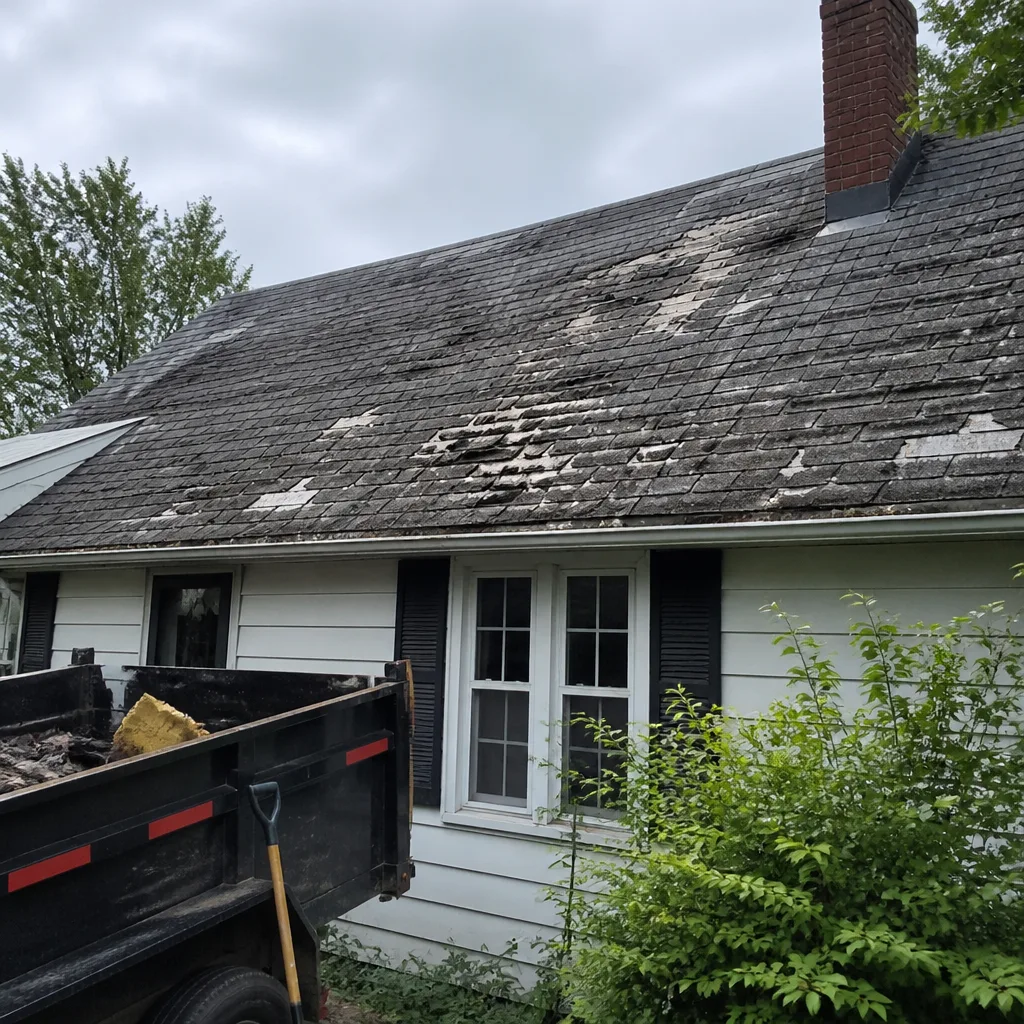 Before
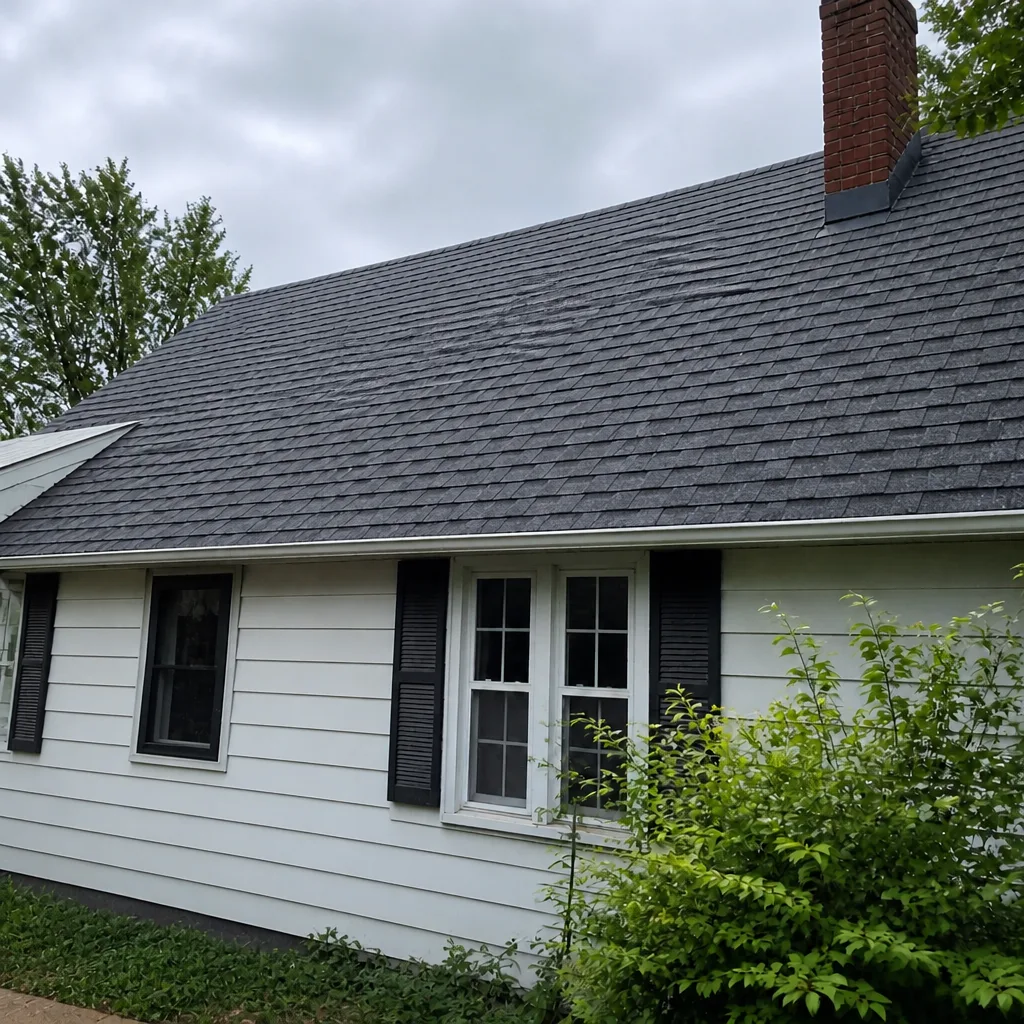 After
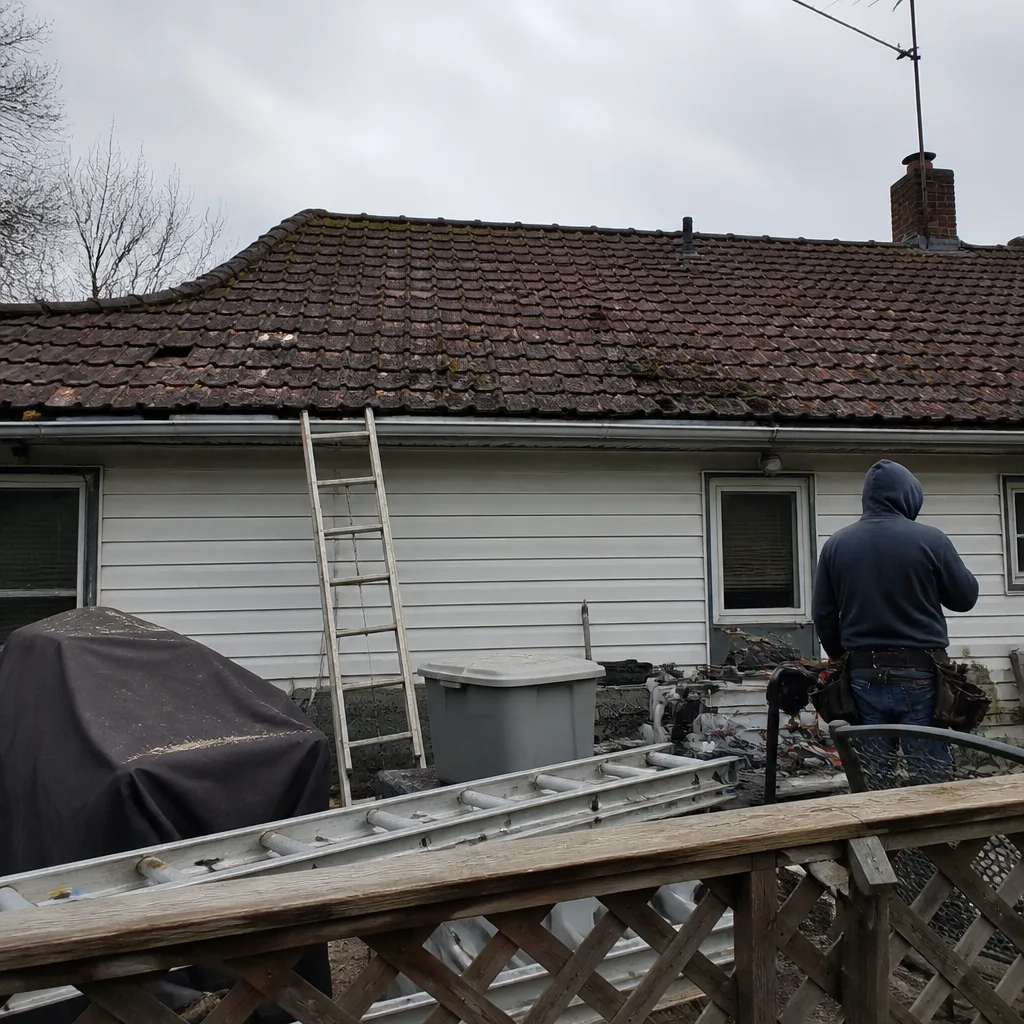 Before
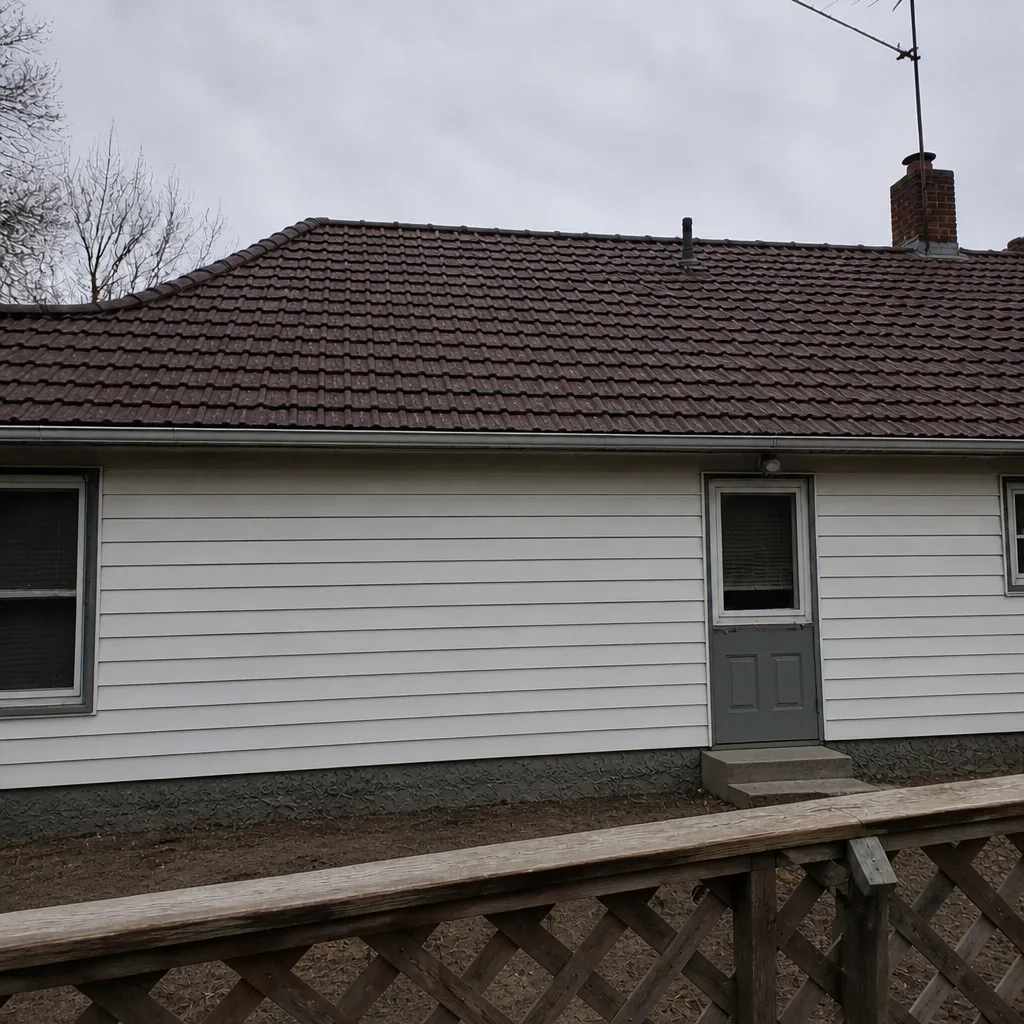 After
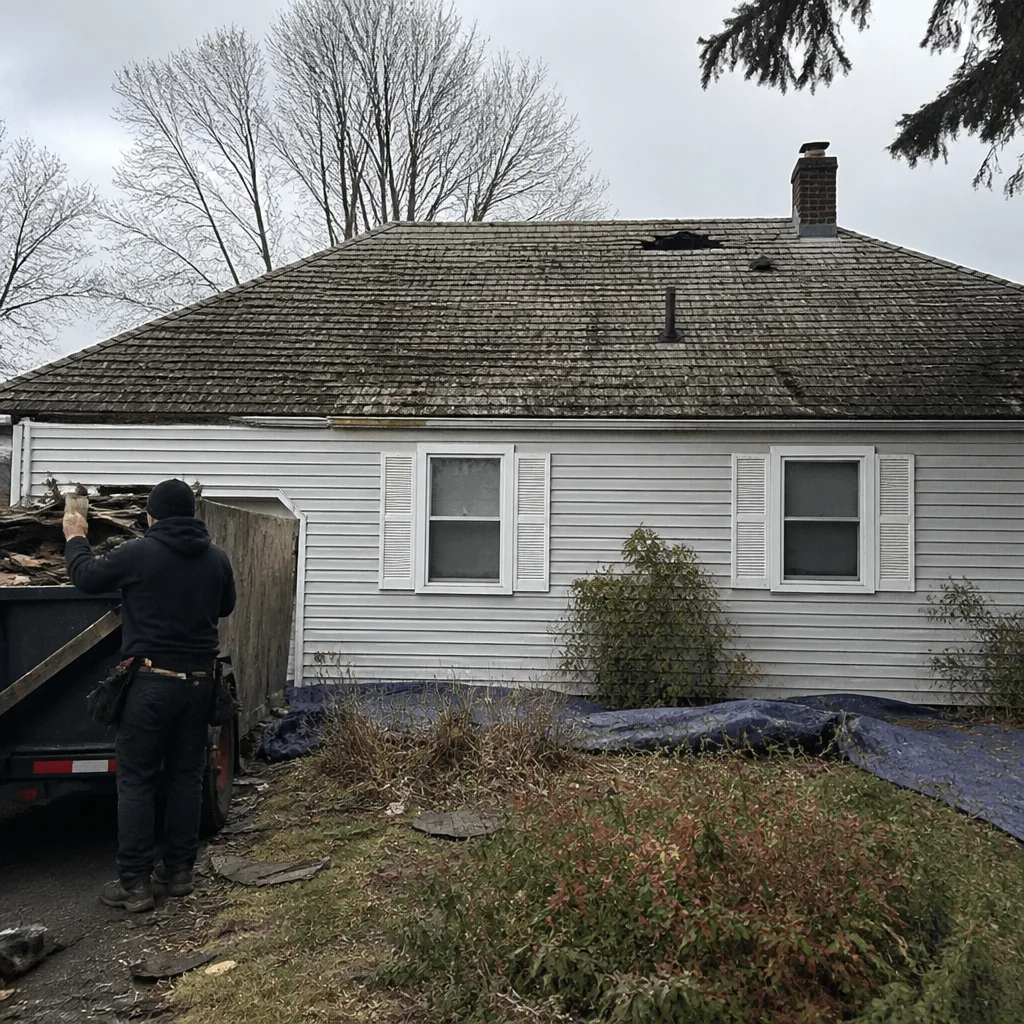 Before
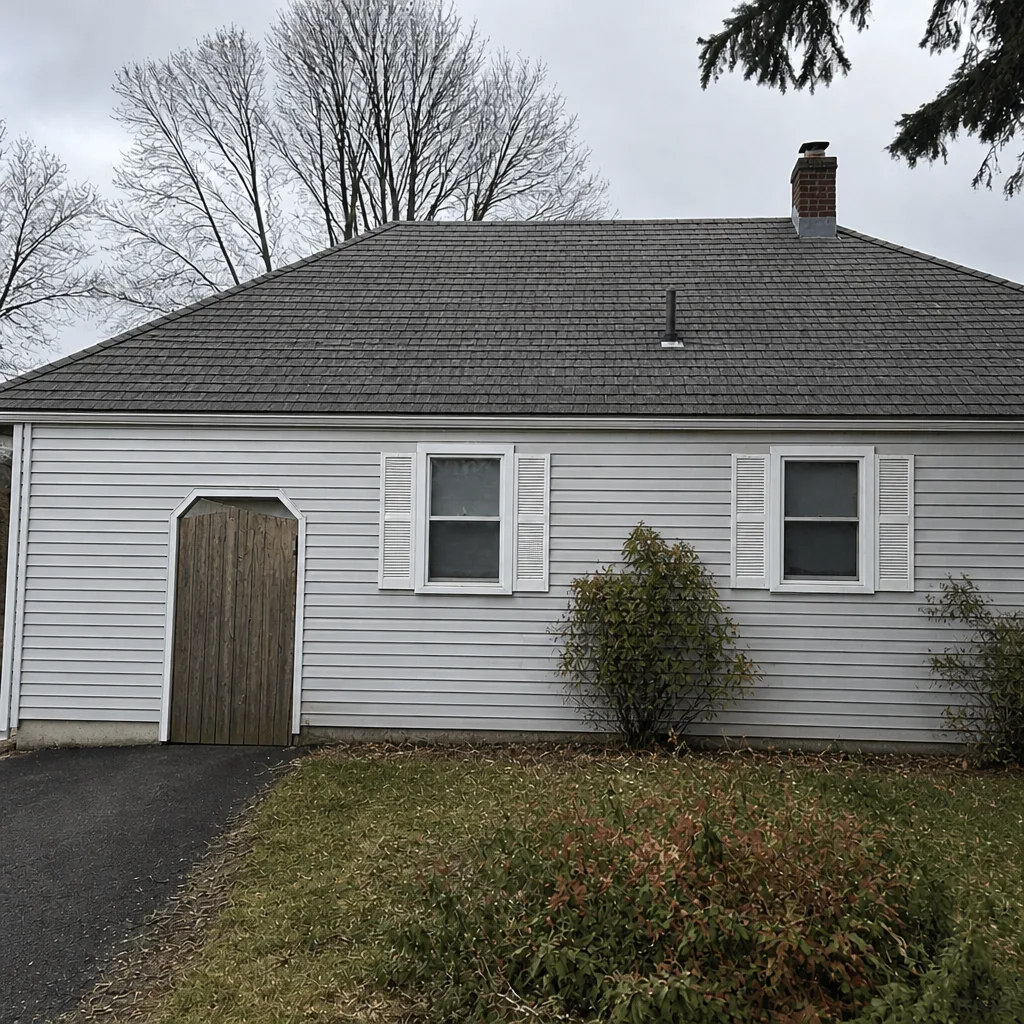 After
When to Call a Professional
Some roof problems are daylight-only; others involve heights and structural questions that need experience. Anything that requires getting on the roof is a professional’s job, and that’s not negotiable. But the specific triggers to call us are: a ceiling stain that has developed more than one ring, water actively coming in during a storm, a leak that has returned after a previous repair, soft or crumbly sheathing anywhere you can see it, a section of shingles visibly lifted or missing, or any leak directly below a chimney, vent stack, or skylight where you can’t see the penetration from the ground. Our technicians have up to 10 years of experience diagnosing exactly these situations in Rochester’s climate and housing stock. Valor Roof Repair offers free estimates in Rochester. Call (855) 473-8654 to schedule yours. We answer 24/7. Fast dispatch from 7am to 7pm, Sunday through Friday, closed Saturday. You can also read more about the team behind the work on our Rochester service page.
Frequently Asked Questions
The most reliable method is an attic-first inspection: trace the ceiling stain uphill along the rafter, follow the drip marks and insulation staining to the entry point, and then match that location to the nearest penetration on the roof. The ceiling stain is where the water exits, not where it enters. Water can travel six feet or more along a rafter before it drips, so the real leak is almost always further uphill than the stain suggests. Call (855) 473-8654 for a free estimate once you’ve got your photos together.
Ice dam backflow is the most common winter leak driver in Rochester. Heat escaping into the attic melts snow on the roof from below, the meltwater refreezes at the cold eaves, and the ice forms a dam that pushes meltwater back up under the shingles. The leaks typically show up at the ceiling near the exterior wall rather than the center of the room. Ice damming is a heat-loss issue, not a shingle failure, so the lasting fix addresses attic ventilation and insulation as well as the damaged roofing material. Call (855) 473-8654 to schedule a free estimate and get the cause identified.
Location and pattern are the tell. A pipe boot failure produces a leak directly below a vent stack, usually an isolated spot with a single trail. A valley leak sits higher on the roof where two planes meet and tends to produce stains on a ceiling below an interior room, often with a wet trail further from the exterior wall. Both are targeted repairs, but the scopes differ. Ask specifically where the entry point is before approving any work. Call (855) 473-8654 for a free estimate if you’re not sure which one you’re dealing with.
A repair is the right answer when the failure is localized, the surrounding shingles are sound, and the deck is solid when checked from the attic. A replacement is the right answer when the failure is widespread, the deck is compromised across a significant area, or the roof covering is at the end of its service life. Between those two, most roofs are repairable. A repair-first roofer offers the repair option first and explains why a larger job is needed if it is. Valor Roof Repair leads with repair for exactly this reason. Call (855) 473-8654 to get the diagnosis and the estimate.
No. Rooftops are a fall risk and the interior tells you more than the roofline does in most cases. Walk the attic with a flashlight and a phone camera, photograph the ceiling stain, the rafters, the insulation, and the sheathing, and let a trained professional handle the roof itself. Our guidelines on safety are firm here: high work belongs to a trained crew with proper fall protection. Call (855) 473-8654 and we’ll schedule a free estimate and handle the roof inspection safely.
Targeted repairs typically fall between $250 and $900 depending on the type. A pipe boot replacement usually runs $250 to $450, a flashing repair $350 to $650, and a valley section $450 to $900. A localized deck repair is in a higher range because the shingles have to come up to reach the sheathing. The written estimate sets the final price, and the estimate is free. Call (855) 473-8654. We answer 24/7. Fast dispatch from 7am to 7pm, Sunday through Friday.
The Bottom Line
Rochester’s roof problems follow a pattern: an indoor symptom appears, the real leak is some distance away, and the season tells you what kind of failure to expect. Diagnose from the inside out. Walk the attic before anyone climbs the roof. Photograph the trail so you have evidence to compare against every contractor’s answer. Match the failure to its repair scope – boot, valley, or deck – and keep the conversation honest by asking for photos and repair options before agreeing to a larger job. None of this replaces a proper inspection, but it makes you a better judge of the one you get. Valor Roof Repair offers a free inspection and a written estimate, sized to the actual problem. Call (855) 473-8654 to schedule yours today. We answer 24/7. Fast dispatch from 7am to 7pm, Sunday through Friday, closed Saturday.
Written by the team at Valor Roof Repair.