
Last updated November 14, 2026
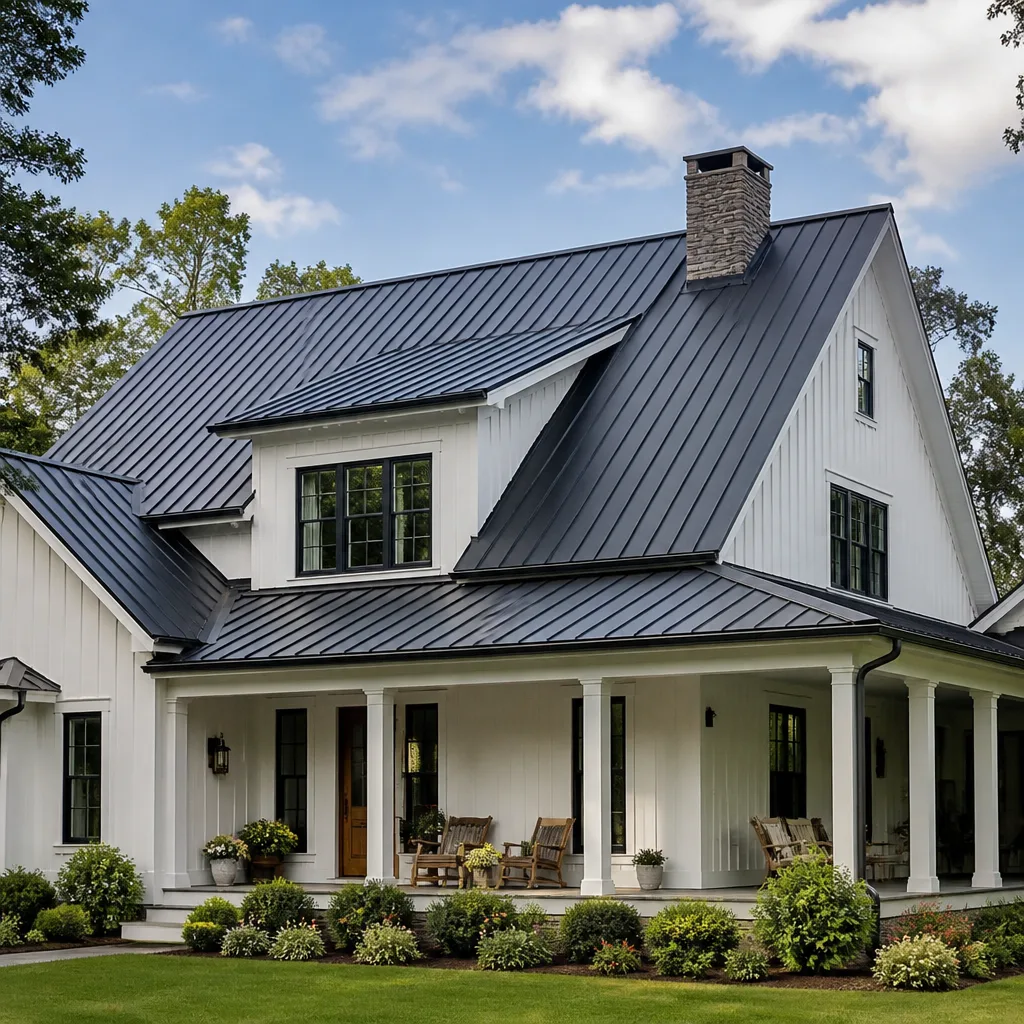 Metal roofing
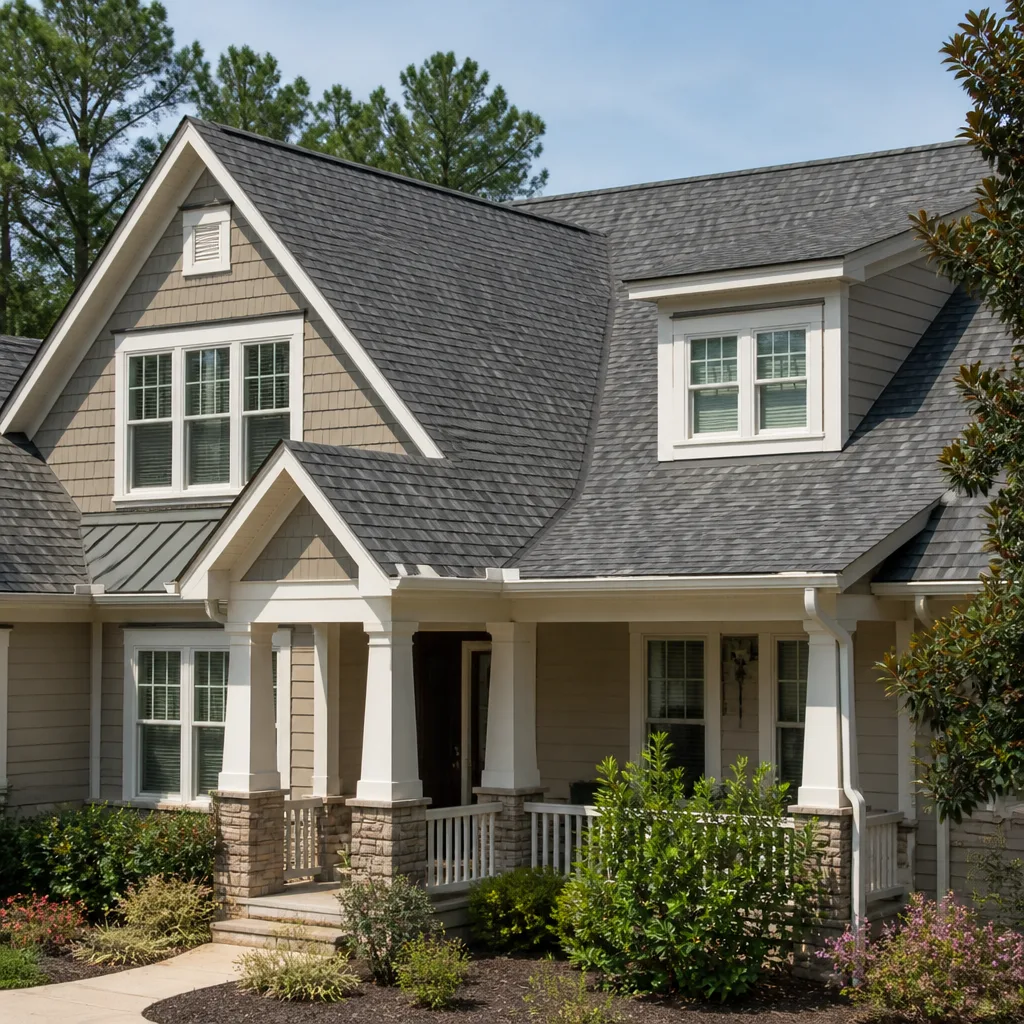 Architectural shingles
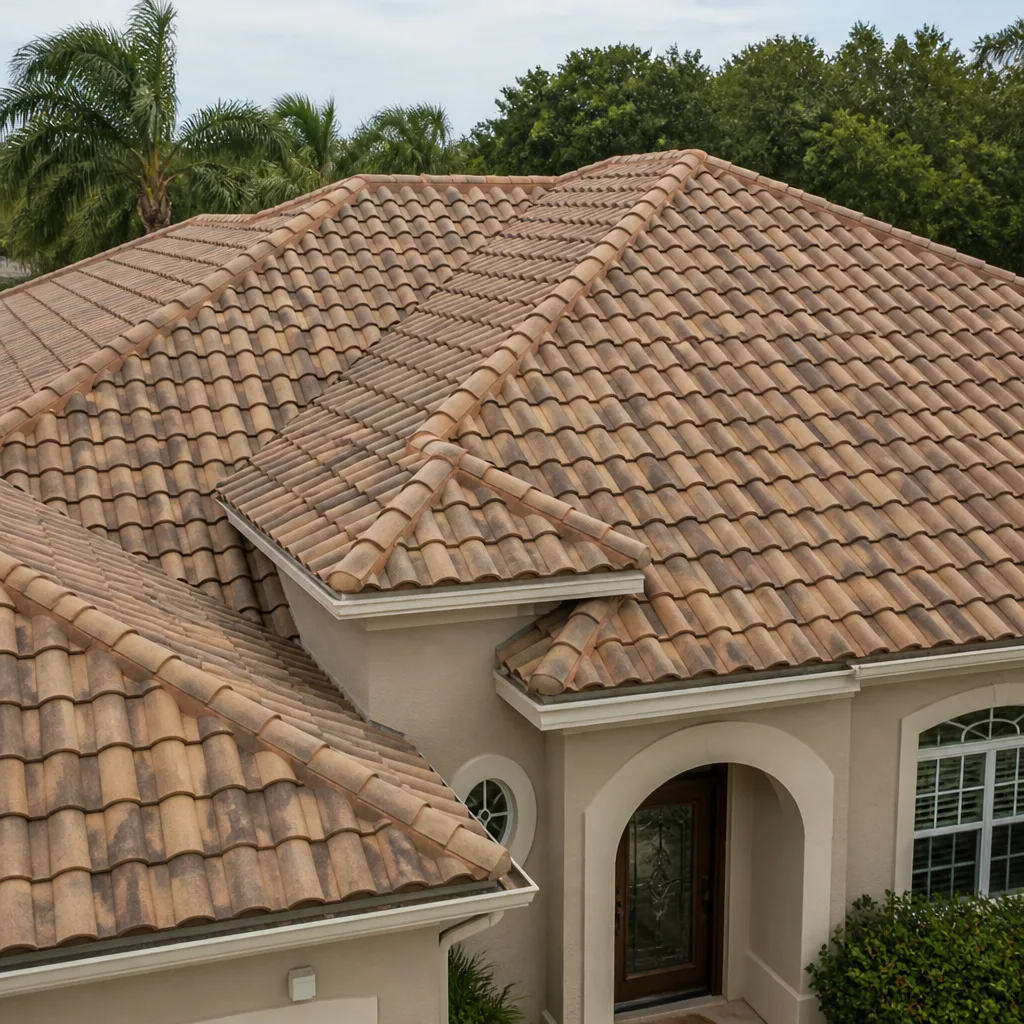 Tile roofing
 GAF
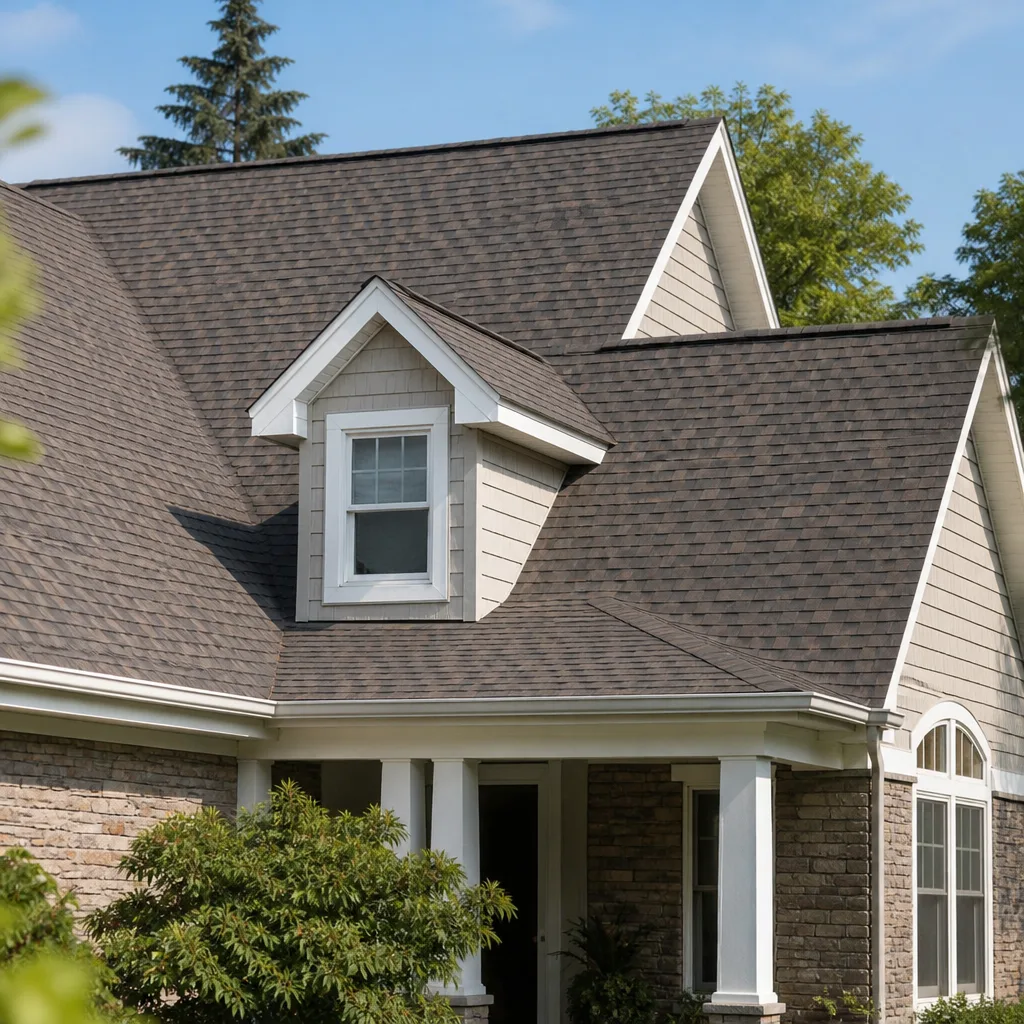 Owens Corning
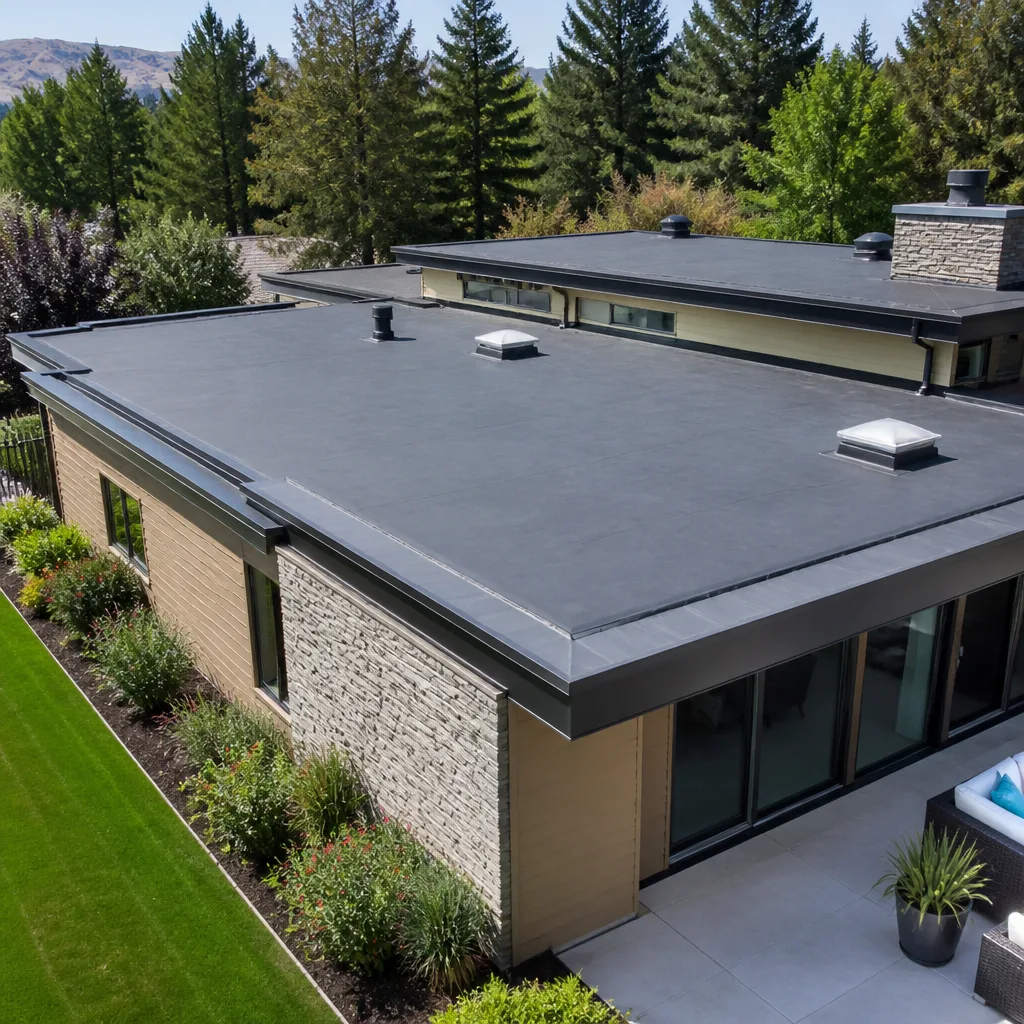 Flat & low-slope
Free roof inspection with deck photos before we talk money - GAF and Owens Corning certified installation
How to Hire a Roofing Contractor in Rochester: A Step-by-Step Guide
Most hiring advice tells you to get three quotes and read the reviews. That’s table stakes, and it won’t protect you from the problems Rochester homeowners actually run into. The roofing trade has a structure to it – who holds the license, who carries the insurance, who employs the crew, which manufacturer backs the material – and the contractors who cut corners are usually cutting them somewhere in that structure, not in their star rating. This guide teaches you to audit that structure before you sign anything. You’ll learn to verify a New York State license in under two minutes, read certification levels for what they’re worth, and spot the five contract clauses that separate a professional roofer from a liability.
Quick Answer
To hire a roofing contractor in Rochester, verify the contractor’s New York State Department of State license number directly on the state’s website, confirm general liability and workers’ compensation coverage in writing, and read the contract for lien waivers, material specifications, and a defined payment schedule. Then judge the business itself: a local company with a registered address, established supplier relationships, and its own W-2 crew is a safer bet than a crew that appeared after the last storm. Star ratings help, but paperwork and business structure protect you.
Styles & brands we work with
- Architectural shingles
- Metal roofing
- Tile roofing
- GAF
- Owens Corning
- Flat & low-slope
Table of Contents
- Step 1: Verify the License With New York State
- Step 2: Understand What Manufacturer Certifications Actually Mean
- Step 3: Tell a Storm-Chaser Crew From a Local Business
- Step 4: Read the Five Clauses That Matter
- Step 5: Ask Who Actually Swings the Hammer
- Step 6: Confirm Insurance and Liability Coverage
- Step 7: Know Your Material Options Before You Sign
- Step 8: Compare Estimates Apples to Apples
Step 1: Verify the License With New York State
New York doesn’t hand out a single statewide roofing license the way some states do, and that confuses a lot of homeowners. What exists instead is a mix: home improvement contractor registration through the New York State Department of State, plus local licensing rules that vary by municipality. A contractor working in Rochester should be able to produce a registration number, and you should be able to check it yourself.
Here’s the two-minute version:
- Ask the contractor for their New York State home improvement contractor registration number and the exact business name tied to it.
- Go to the Department of State’s online license and registration lookup.
- Search by the number or by the business name and confirm the record is active, not expired or revoked.
- Check that the name on the registration matches the name on your contract and the name on the insurance certificate.
That last step catches more problems than people expect. A crew operating under one business name while the paperwork is filed under another is a red flag worth walking away from. If a contractor can’t or won’t give you a number, that’s your answer. Move on.
Local rules can add another layer. Depending on where in Monroe County the property sits, there may be additional municipal registration or permitting requirements, so it’s worth a quick call to the local building department to confirm what applies to your address. A professional contractor will already know this and won’t flinch when you ask.
Step 2: Understand What Manufacturer Certifications Actually Mean
Manufacturer certifications sound impressive on a business card, and some genuinely are. The trick is knowing which ones affect your warranty and which are mostly a marketing badge. Programs like GAF Master Elite and Owens Corning Preferred sit at the top of the stack because they require the contractor to meet certain licensing, insurance, and installation standards – and those programs often come with enhanced warranty options you can’t get from an uncertified installer.
That last part is the one to focus on. When a manufacturer certifies an installer, the manufacturer is staking some of its reputation on the workmanship. That’s why certified installers can sometimes offer longer workmanship coverage on the labor side, not just the material side. Ask specifically: what warranty applies to the installation, and is it the manufacturer’s standard coverage or the upgraded version tied to certification?
What certification doesn’t mean is that a non-certified roofer does bad work. Plenty of skilled contractors install excellent roofs without a badge. And a certified contractor can still install the roof poorly. Certification is one signal among several – useful, worth checking, but not a substitute for the rest of this guide.
One more detail worth knowing: certification is brand-specific. A contractor certified with GAF is telling you something about GAF products, not about CertainTeed or Tamko systems. If you’re weighing material brands, ask which systems the contractor is actually certified to install and which they buy on the open market. The answer tells you a lot about how they source.
Step 3: Tell a Storm-Chaser Crew From a Local Business
After a major ice storm rolls through Monroe County, out-of-state roofing crews tend to show up within days, knock doors, offer to “handle the insurance claim,” and take deposits. Some leave just as fast, and homeowners are left with a voided warranty and a phone number that no longer works. The pattern repeats after every significant storm event in the region. The way to protect yourself is to audit the business before you hand over anything.
Start with the registration date. A business that was registered a few weeks ago and is already going door to door deserves a slow yes, at most. Established local contractors have a history you can check – not just a website, but a paper trail.
Then look at supplier relationships. Local roofers buy from regional building supply yards, and those relationships are visible. Ask which supplier delivers your material and whether you can expect delivery to be scheduled through a known local yard. A contractor who can’t name a supplier, or who shows up with material that “just arrived from out of state,” is worth questioning.
Other signals to weigh:
- A local, verifiable business address rather than a P.O. box or a hotel room.
- Familiarity with local code and permit processes in Rochester and the surrounding towns.
- A willingness to put the scope, price, and timeline in writing before you sign.
- A request for a large upfront cash deposit, especially one tied to “securing material.”
None of these is proof on its own. Together, they sort real local businesses from transient ones quickly.
Step 4: Read the Five Clauses That Matter
Most homeowners read the price and sign. The clauses below the price are what actually protect you. Here are the five that make the difference between a professional roofer and a risk:
- Scope of work with material specification. The contract should name the exact material, brand, and product line – not “architectural shingles” but the specific system. If the brand isn’t named, you’ve given the contractor permission to substitute.
- Material substitution language. If the contract allows substitutions, it should say what qualifies and require your written approval before any swap happens. Open-ended substitution clauses are how homeowners end up with a cheaper product at the original price.
- Lien waiver. This protects you from a subcontractor or supplier placing a mechanic’s lien on your property because the roofer didn’t pay them. Ask for a conditional lien waiver tied to final payment, and a final unconditional waiver when the job closes.
- Payment schedule. A deposit is normal. Paying most of the job before the roof is finished isn’t. The schedule should leave a meaningful holdback until the work passes inspection and cleanup is done.
- Workmanship warranty and exclusions. The warranty should state what’s covered, for how long, and whether it’s transferable to a future buyer. Read the exclusions carefully – that’s where coverage quietly disappears.
If any of these are vague, ask to have them put in writing before you sign. A contractor with nothing to hide writes it plainly. The ones who get defensive about contract language are telling you something.
Step 5: Ask Who Actually Swings the Hammer
Here’s a question few homeowners think to ask: are the people on my roof your employees or subcontractors? The answer matters, and it has nothing to do with snobbery about the trade.
A contractor using W-2 employees carries workers’ compensation insurance on those workers. If someone is injured on your roof, that coverage is what stands between you and a claim. A contractor using day-labor subcontractors may push the liability question in your direction depending on how the paperwork is set up. This isn’t a hypothetical – it’s a real source of exposure for homeowners.
The questions to ask directly:
- Are your installation crews employees or subcontractors?
- Does your workers’ compensation policy cover everyone who sets foot on my roof?
- Who is my point of contact if something goes wrong – the same company, or someone I’ve never spoken to?
Get the answers in writing, ideally on the certificate of insurance. A contractor who can’t tell you who’s on their crew, or who deflects the question, is a contractor you should be cautious with.
This is also where the “one company, whole job” structure earns its keep. When inspection, roof repair, and replacement all run through the same business, there’s no middleman to disappear when a problem surfaces. Valor Roof Repair works this way on purpose – one accountable company from the first inspection through the final installation.
Step 6: Confirm Insurance and Liability Coverage
Ask for a certificate of insurance and actually read it. Two coverages matter: general liability, which protects your property if the crew damages it, and workers’ compensation, which protects you if a worker is injured on the job. A professional contractor will send both without hesitation and will list you as an additional insured on the liability policy if you ask.
Verify the certificate by calling the insurer directly. Certificates can be forged, and it’s not unheard of for a policy to have been canceled after the certificate was issued. The insurer will confirm active coverage in a short phone call. That five-minute check is worth more than any review you’ll read.
One more thing to watch for: the coverage limits. State minimums vary, but a policy with the lowest permissible limits may not cover a serious loss. If you’re hiring a contractor for a full replacement, the coverage level should be reasonable for the scope of work. Ask the contractor to explain it if the numbers don’t tell you anything.
Insurance and license verification overlap with the first step of this guide. Do both. The reason is simple: when a claim comes up later, the paper trail is what settles it. A good Valor Roof Repair or any other reputable outfit will walk you through this without resistance.
Step 7: Know Your Material Options Before You Sign
If a contractor only quotes one brand, you’re not really getting a recommendation. You’re getting an inventory decision. That’s the reason it pays to understand material tiers before the estimate comes back.
Residential roofing systems fall into three broad price and performance bands:
- Premium tier. Brands like GAF and CertainTeed offer systems with stronger warranty programs and, in the case of their certified installer networks, longer workmanship coverage.
- Mid-range. Owens Corning and similar lines sit here for many homeowners – solid performance, broad availability, a slightly lower price point than the top tier.
- Value tier. Tamko, Boral, and comparable lines can be a good fit when the budget is real and the roof design doesn’t call for premium features.
The right answer is usually in your roof’s condition, your budget, and your long-term plan for the house. A value-tier system installed well, with proper flashing and underlayment, is a better roof than a premium system installed badly. A contractor with real material range is one that can work with both scenarios.
Ask specifically: which brands do you install, and why are you recommending this one for my roof? A good answer references the roof’s condition, the home’s architecture, and your budget. A bad answer references whatever’s already in the supply yard.
Step 8: Compare Estimates Apples to Apples
Three estimates on three different scopes aren’t comparable. The numbers mean nothing if one quote includes tear-off and the other doesn’t, or if one specifies full underlayment and the other uses a cheaper wrap. Getting a fair comparison starts with asking every contractor to quote the same thing.
Build a simple comparison sheet. For each estimate, note:
- Total square footage being roofed.
- Tear-off included, yes or no.
- Underlayment and flashing included, and the specific material.
- Brand and product line name.
- Ridge vent, drip edge, and ice-and-water shield specifics (worth asking about in Rochester’s climate).
- Workmanship warranty length and whether it transfers to a buyer.
- Payment schedule and holdback at completion.
- Permit responsibility – who pulls it.
The lowest number on the page is rarely the lowest cost over the life of the roof. A quote that includes proper flashing and a real warranty behind the work costs more upfront and less over ten years. When estimates line up on scope, the comparison becomes meaningful.
This is also the moment to ask the repair-or-replace question directly. A contractor worth hiring will tell you if a targeted repair gets you another five years and a full replacement is premature. Valor Roof Repair built its name on exactly that call – the honest one, not the upsell.
Common Mistakes to Avoid
- Signing before you verify the license. A registration number on paper means nothing until you’ve looked it up on the state’s site. It takes two minutes.
- Accepting a verbal quote. If the scope, brand, and material aren’t written down, they’re up for substitution the moment the crew arrives. The written estimate sets the price, and it’s the only version that counts.
- Paying a large deposit in cash. Deposits are normal, but they should be modest, documented, and tied to a written schedule. Cash without a receipt is a headache waiting to happen.
- Hiring the first crew that knocks after a storm. Rochester’s ice storms pull in out-of-state crews, and a registered-this-month business with no local supplier relationship is one to slow down on.
- Skipping the lien waiver. Without it, a supplier who didn’t get paid can file a lien on your home even though you paid the roofer in full.
- Choosing on brand recognition alone. A well-installed value-tier roof beats a poorly installed premium one every time. Installation quality carries more of the result than the label on the bundle.
- Letting the warranty question slide. Workmanship coverage, not material coverage, is the one that protects you if leaks show up in year seven. Ask who honors it and for how long.
See the difference
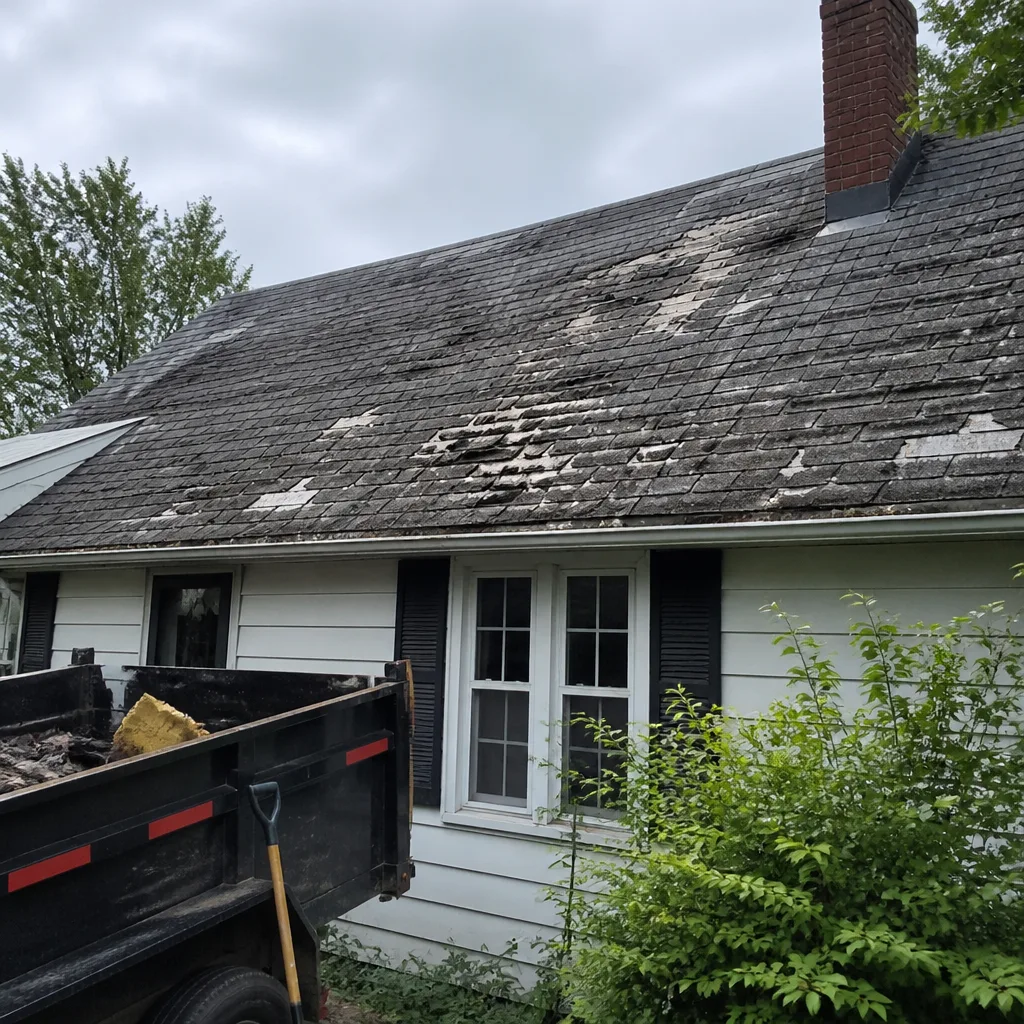 Before
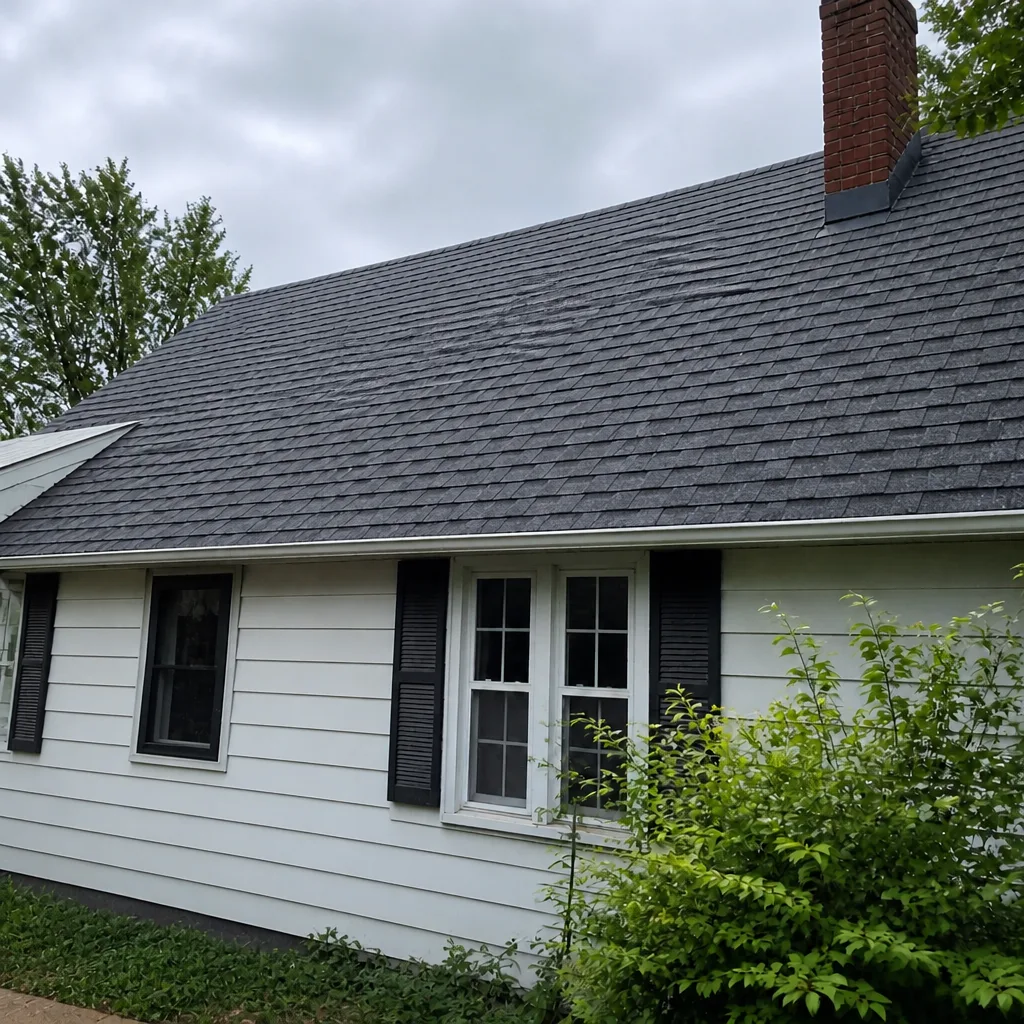 After
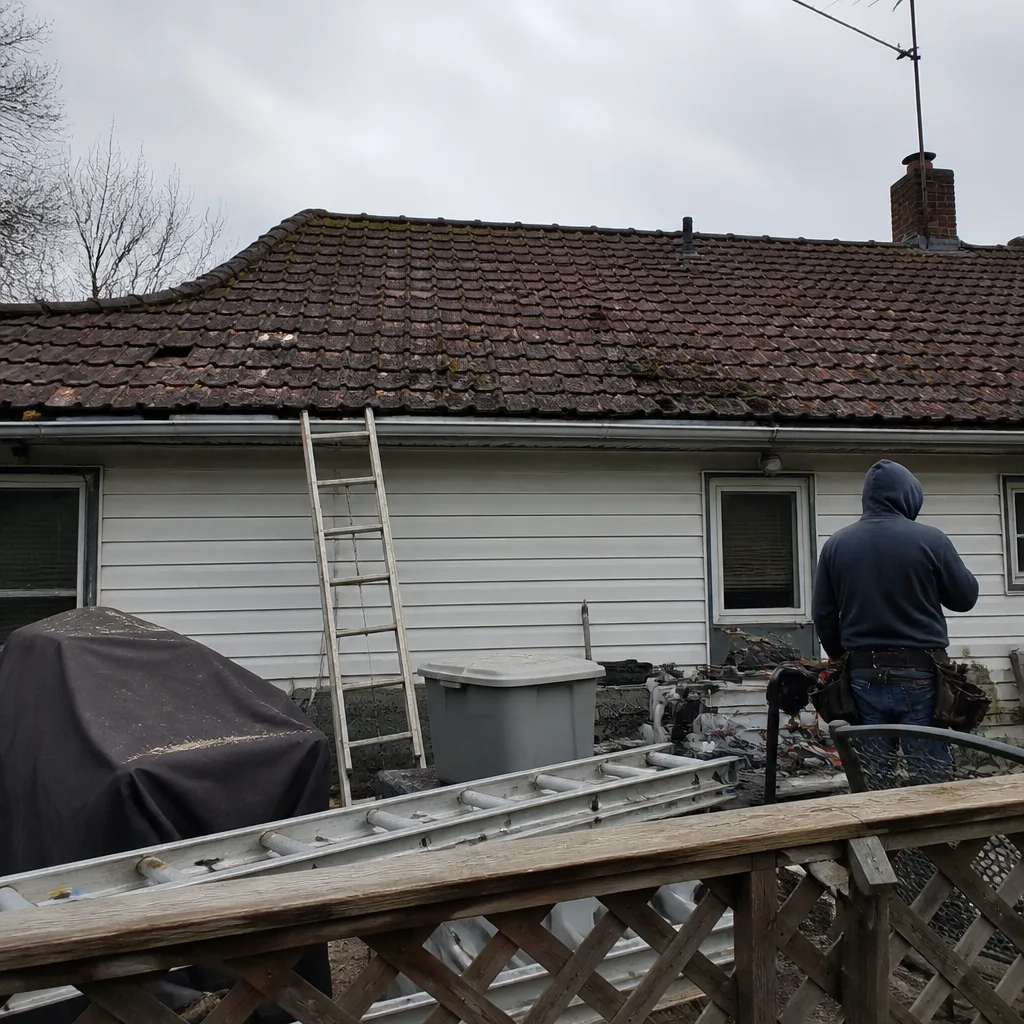 Before
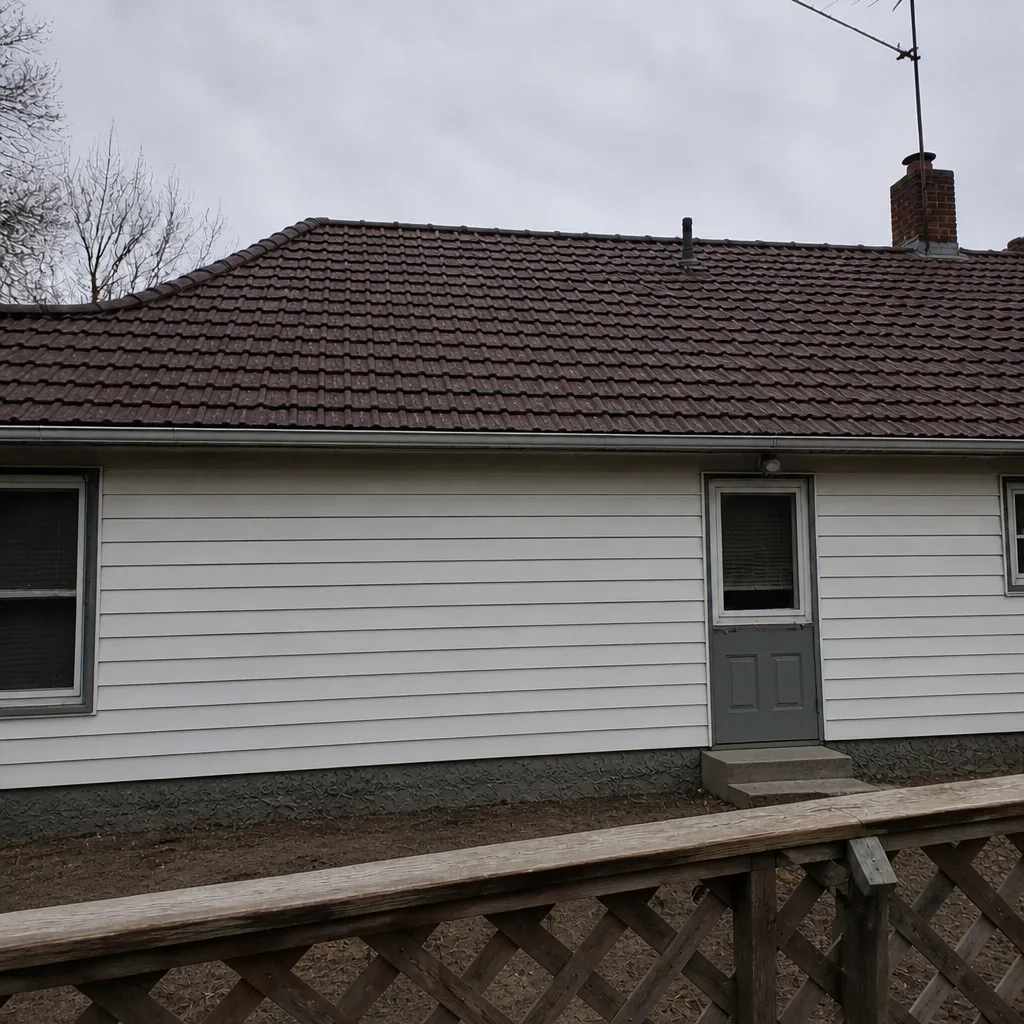 After
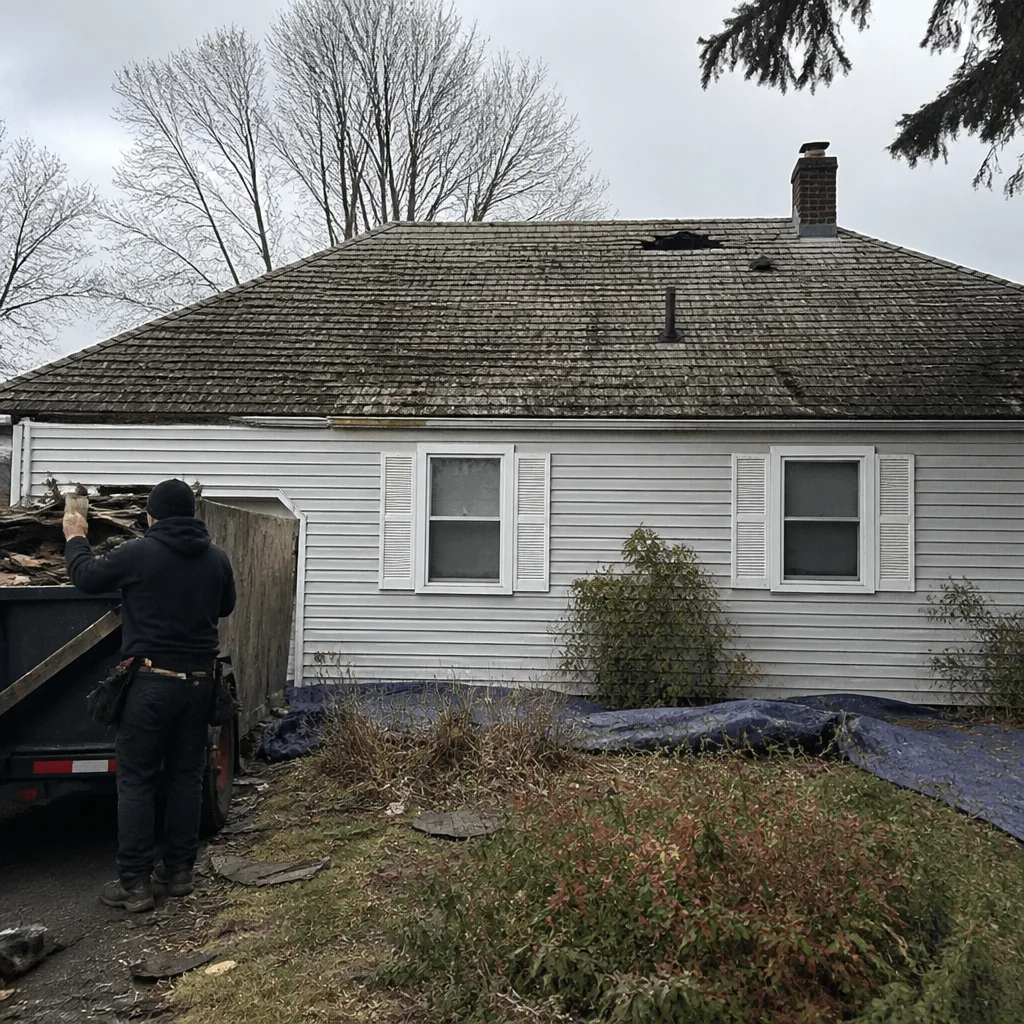 Before
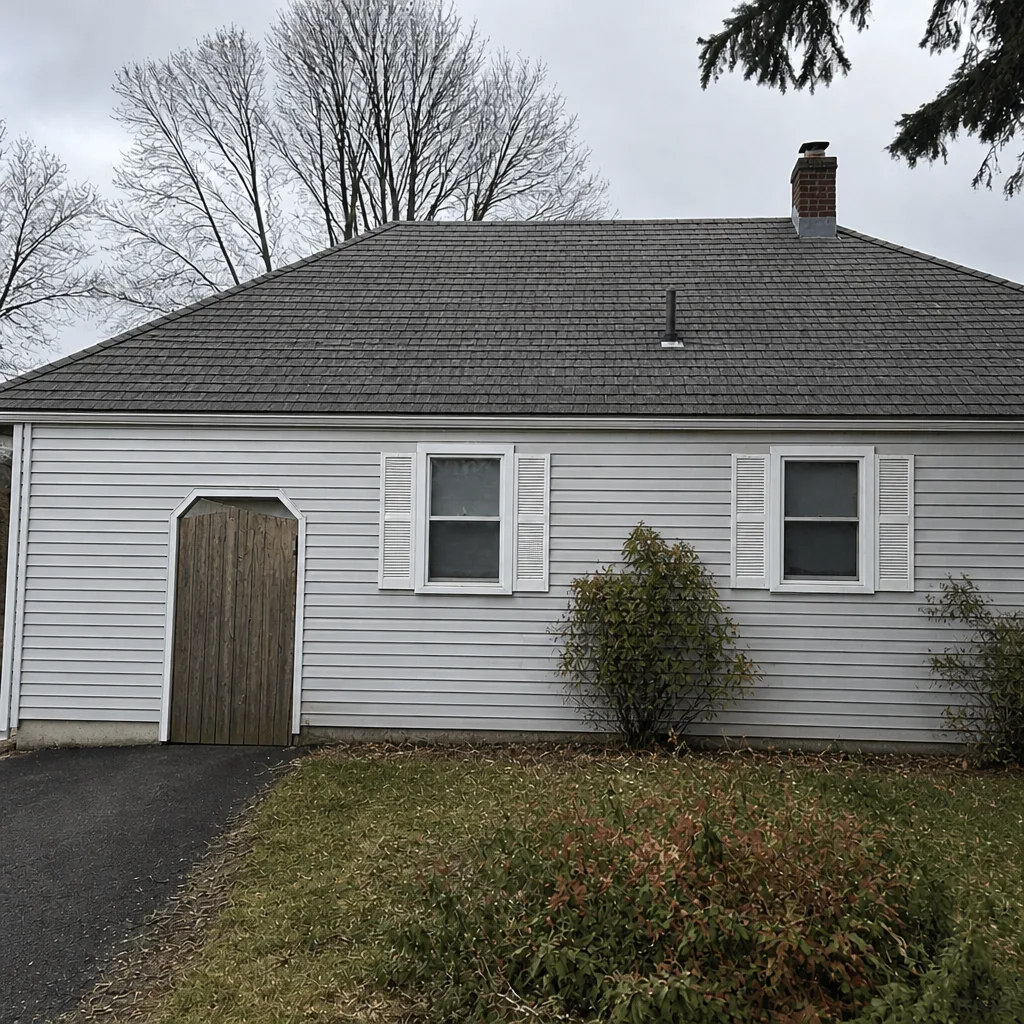 After
When to Call a Professional
Some roofing questions can wait. A stain on a ceiling that shows up after a heavy rain, missing or curling shingles on a visible slope, granules collecting in the gutter downspouts, or daylight peeking through in the attic are all signs worth a professional inspection. In Rochester’s climate, ice damming along the eaves is a common source of hidden damage and usually needs a trained eye to diagnose properly. Roof work is genuine height work – one misstep on a pitched surface is a serious injury – so this isn’t a job to attempt from a rented ladder. If a leak is active, damage is spreading, or storm debris has punctured the roof, get a professional out to look at it. Valor Roof Repair offers free estimates in Rochester – call (855) 473-8654. We answer 24/7. Fast dispatch from 7am to 7pm, Sunday through Friday.
Frequently Asked Questions
Ask for their New York State home improvement contractor registration number, then look it up on the Department of State’s online lookup to confirm it’s active. Match the business name on the registration to the name on your contract and insurance certificate. If the names don’t line up, ask why before you sign.
Small repairs like flashing and minor shingle replacement typically run a few hundred dollars, while larger localized repairs can run into the low thousands depending on the area affected and the material. Costs vary with roof pitch, access, and material tier. We give a written, line-item estimate before any work starts, and the written estimate sets the final price. Call (855) 473-8654 for an exact quote – estimates are free.
Those are manufacturer certification programs that require the contractor to meet licensing, insurance, and installation standards, and certified installers can often offer enhanced workmanship warranty options tied to the manufacturer. The certification applies only to that brand’s systems, not to every material the contractor installs. If you’re considering a different brand, ask what certification applies to that system.
A roofing contract should include a detailed scope of work with the specific material brand and product line, a defined payment schedule with a holdback, a lien waiver, the workmanship warranty terms and exclusions, and written approval required for any material substitution. Anything vague in those areas should be tightened before you sign.
It shouldn’t, if the estimate is written properly. Hidden rot, damaged decking, or unexpected structural issues can come up once the shingles are off, and a professional contractor documents those findings with photos and gets your written approval before doing any added work. The original written estimate is the baseline; anything additional is a separate, approved line item.
Most residential tear-off and re-roof projects finish in one to three days depending on roof size, pitch, and weather. Rochester’s climate can extend the timeline when a cold front or rain rolls through mid-job, so a realistic schedule accounts for weather. A professional contractor will tell you what the window looks like before the crew arrives, and a full roof replacement schedule should account for permitting timelines as well.
The Bottom Line
Hiring a roofer in Rochester is a paperwork exercise more than a popularity contest. Verify the state registration, confirm the insurance, read the contract for the five clauses that protect you, and ask who’s actually on the crew. Storm-chasers fail these checks quickly. So do the contractors who won’t put material specifications in writing. The takeaway is simple: the contractor who welcomes your questions and answers them in writing is the one worth hiring. If you’re ready for that kind of honest assessment, we’re happy to help. Call (855) 473-8654 for a free estimate. We answer 24/7. Fast dispatch from 7am to 7pm, Sunday through Friday.
If you want a second opinion about whether your roof needs repair or replacement, we’re glad to look at it. We work in Rochester and the surrounding communities and install across seven major brands, so the recommendation follows your roof’s condition and your budget, not a single inventory line. Our technicians have up to 10 years of experience. We inspect it honestly, then tell you what it needs – repair or replace, nothing more.
Written by the team at Valor Roof Repair.