
Last updated November 14, 2026
 Metal roofing
 Architectural shingles
 Tile roofing
 GAF
 Owens Corning
 Flat & low-slope
Free roof inspection with deck photos before we talk money - GAF and Owens Corning certified installation
Roofing Warning Signs: A Rochester Homeowner’s Reference Guide
By the time you see a water stain on your ceiling, the roof deck has likely been wet for weeks. That’s the uncomfortable truth behind most warning-sign checklists: they describe failure that has already happened, already spread, and already run up a bill. In Rochester, where freeze-thaw cycles work on a roof from November through March, the signs that matter show up one stage earlier. They’re subtle. They’re often visible from the ground. And they’re the difference between a targeted repair and a full replacement. This guide organizes warning signs by where you’re standing when you spot them, from the curb to the attic, so you can judge severity before a single shingle moves.
Quick Answer
The most reliable roofing warning signs in Rochester show up in the attic and at the roof’s edges before anything appears on the ceiling: daylight gaps at the ridge, dark staining on rafters, frost on the underside of the deck, rusty fascia stains, and paint peeling on soffits. Catching these early usually means a repair rather than a replacement. A water stain on the ceiling means the problem has already been active for a while.
Styles & brands we work with
- Architectural shingles
- Metal roofing
- Tile roofing
- GAF
- Owens Corning
- Flat & low-slope
Table of Contents
- What You Can See From the Ground
- Ridge Warning Signs
- Field Shingles: Granule Loss vs. Structural Failure
- Eaves, Fascia, and Soffits
- Valleys and the Ice Dam Cycle
- Attic Signs That Come Before Exterior Damage
- Severity Triage: Monitor, Repair, or Call Today
- Common Mistakes to Avoid
What You Can See From the Ground
You can read a lot about a roof from the sidewalk with a pair of binoculars and a calm eye. The trick is knowing which sections to scan and what each symptom points to. Most homeowners look at the middle of the roof and stop there. The real information sits at the edges.
Here’s a working checklist you can run in about ten minutes without leaving your yard:
- Step back to the opposite curb and look at the full roofline, not just the slope facing you. A sagging ridge line or a dip in the field is structural, not cosmetic.
- Scan the ridge cap first. Missing or cracked cap shingles are common and inexpensive to fix while they’re still isolated.
- Look at the field shingles for color variation, curling edges, or patches that look darker than the rest.
- Walk the perimeter and check the fascia boards for staining or peeling paint.
- Look at the gutters. Granules in the gutter are normal. Sagging gutters pulling away from the fascia are not.
- Check the valleys where two roof planes meet, especially if you can see them from the side of the house.
If any of those checks turn up something you’re not sure about, keep reading. Then walk the attic. The attic is where the story usually gets clear. In our experience working Rochester homes, the interior signs almost always precede the exterior ones by weeks or months, which is exactly the window where repair-first thinking pays off.
Why binoculars beat a ladder
A ladder climb on a wet or frosty roof is genuinely dangerous, and the view isn’t much better than a careful look from the ground. You’re looking for patterns, not individual nails. Binoculars give you the pattern faster and keep you on solid footing.
Ridge Warning Signs
The ridge is the top line of the roof where two slopes meet. It takes the most wind and the most freeze-thaw movement, and it’s the section most often patched poorly by whoever got there first. Ridge trouble tends to be a shingle problem long before it becomes a leak problem, which makes it one of the best places to catch something early.
Signs to watch for at the ridge:
- Missing cap shingles. Individual caps lifting or blowing off is a common storm-damage pattern in Rochester. It’s usually a small repair if caught before water gets under the cap.
- Cracked or split caps running perpendicular to the ridge line. This often points to movement in the roof structure below rather than shingle wear alone.
- Visible fasteners. Nail heads showing through a cap means the shingle has backed out, and the next step is a leak at the ridge.
- A ridge that looks wavy from the curb. That’s a framing question, not a shingle question, and worth a professional inspection.
Ridge repairs are often the cheapest roof repair on the invoice. They’re also the ones homeowners most often put off because the roof above the ceiling still looks dry. That window closes fast in Rochester once the first hard freeze arrives and any small opening starts collecting ice.
Field Shingles: Granule Loss vs. Structural Failure
Every asphalt shingle loses granules. That’s how they age. The question is whether the loss you’re seeing is normal wear or a sign that the shingle itself is failing. Most homeowners can’t tell the difference from a ladder, and most of the articles they read describe a failure that’s already past the point of prevention.
The distinction that actually matters:
- Cosmetic granule loss shows as scattered bald patches, a slightly darker tone in one area, and a modest pile of granules at the bottom of a downspout after a storm. The shingle still lies flat and the edges are intact.
- Structural shingle failure shows as curling at the edges, clawing (the corners lifting), loss of the adhesive seal between courses, and cracks running across the shingle. This is the point where the shingle stops shedding water and starts absorbing it.
One more thing: roofing material brand and tier both affect how long a field shingle holds its shape. Premium-tier materials from GAF or CertainTeed and value-tier options like Tamko all perform well when they’re installed correctly, but they age differently. When you’re evaluating a warning sign, knowing what’s on the roof helps you judge how much wear is expected and how much is trouble. That’s one reason we install across seven major brands rather than steering every customer toward the same product.
What “curl” and “claw” actually look like
Curl is the shingle lifting at the middle of its edge, like a page of a book starting to turn. Claw is the corner lifting, usually at a shingle’s low point. Both are structural, not cosmetic. A single curled shingle is a repair. A whole course curling in the same direction is often the sign of a ventilation or deck moisture problem underneath.
Eaves, Fascia, and Soffits
The eaves are the lowest edge of the roof overhang. They’re the part of the roof closest to the ice, the snow, and the splashback from the ground, so they take a beating in Rochester winters. Eave trouble is often the first exterior warning sign of an ice dam problem above.
What each eave symptom usually points to:
- Rusty or brown stains on the fascia boards means water has been wicking along the underside of the roof edge. Very often the visible symptom of ice dams or of a poorly sealed eave.
- Peeling or blistering paint on the soffit is trapped moisture escaping through the paint film. Wet soffits mean wet attic air, and wet attic air means the roof deck is getting damp from the inside.
- Separation between the gutter and the fascia is usually a combination of ice weight and deteriorated fascia board underneath. A sagging gutter is a warning sign even if the roof above still looks fine.
- Visible daylight under the drip edge means the drip edge has pulled away from the deck. Small gap now, flashing problem later.
Eave problems are worth a professional inspection sooner than ridge problems because they’re the front line of the ice dam cycle. Left alone, a small fascia issue can turn into a deck repair, and a deck repair turns a simple fix into a much bigger job.
Valleys and the Ice Dam Cycle
Valleys are where two roof slopes meet, and they carry more water than any other part of the roof. In Rochester, they also collect snow and refreeze repeatedly. If there’s one section of a roof that shows trouble first, it’s usually the valley. That’s why any roof repair plan in a cold climate should look hard at the valleys before it looks anywhere else.
The ice dam warning signs, in order of how early they show up:
- Icicles forming at the eaves after a snowmelt. This is a normal winter sight, but repeated heavy icicle formation at one section of the roof edge is a sign that water is melting high on the roof and refreezing at the cold eave.
- Ice at the bottom of a valley. A visible band of ice running down a valley toward the eave means meltwater is being held on the roof surface instead of draining.
- Interior water stains appearing at the top of an exterior wall near a valley, typically after a thaw. This is where the water has already pushed under the shingles.
- Fascia staining combined with soffit paint peeling at the same location. By the time both show up together, the water has been moving along the eave for a while.
The short version: valleys don’t have to be leaking for an ice dam problem to exist. They just have to be holding water. If you can see ice sitting on the roof well after a thaw, that’s the sign.
Attic Signs That Come Before Exterior Damage
If you take one section of this guide seriously, make it this one. In a Rochester winter, the attic tells you what the exterior can’t yet. The signs are specific, and they show up weeks before anything reaches the ceiling drywall below.
Walk the attic with a flashlight and look for the following:
- Dark staining on the rafters or the underside of the roof deck. Water rings, not fresh drips. Rings mean the wood has been wet and dried more than once.
- Daylight gaps at the ridge or along the perimeter. Look up. If you can see daylight through the deck at the ridge or at the eave, there’s a hole in the envelope.
- Frost on the underside of the roof deck or on nail tips in winter. This is the Rochester signature. Warm air from the living space is reaching the deck and freezing on contact. It’s a ventilation and air-sealing warning sign, not necessarily a roofing defect, but the deck moisture it produces can lead to sheathing rot and interior damage if it’s left alone.
- Damp or matted insulation at the eave or near the ridge. Usually the first sign that moisture has been collecting unseen.
- A persistent musty smell or visible mold on the deck sheathing. By the time this shows, the deck has been wet for a while. Repairs get more involved from here.
The frost signature deserves emphasis. Astute homeowners often assume frost on the deck means a leak, but in a cold-climate home it usually points to a warm-roof problem. A trained professional can tell the difference between a water entry issue and a ventilation issue quickly, and the fix is very different in each case. A roof inspection from Valor Roof Repair is a diagnosis, not a sales pitch: we inspect it honestly, then tell you exactly what it needs, repair or replace, nothing more.
Severity Triage: Monitor, Repair, or Call Today
Not every warning sign is urgent. Some are watchlist items you can note and revisit in the spring. Others need a call within days. Here’s a practical triage framework you can apply to what you’ve seen.
Monitor (add to a seasonal check, no action needed now)
- Scattered granule loss with shingles still lying flat
- A single cracked ridge cap with the roof above still dry
- Light icicle formation at one eave after a thaw, with no interior sign
- Faint weathering on south-facing shingles
Schedule a repair (within a few weeks, before the next weather cycle)
- Missing or blown-off cap shingles at the ridge
- A handful of curled or clawed shingles in the field
- Rusty fascia staining without a visible interior stain yet
- Sagging or separated gutter with visible fascia wear
- Frost on the underside of the deck in winter with no staining
Call today (active water entry or structural risk)
- Any interior water stain on the ceiling or exterior wall
- Daylight visible through the roof deck from the attic
- Active drip or musty smell with visible mold in the attic
- A wavy or sagging ridge line
- Soffit paint peeling at the same spot as fascia staining and interior dampness
The middle list is where repair-first thinking saves the most money, and it’s the list most homeowners are slowest to act on because there’s no interior drip yet. When the roof above the ceiling still looks dry, the urgency feels abstract. It isn’t. In Rochester, the gap between “monitor” and “schedule” is often one cold snap.
Common Mistakes to Avoid
- Waiting for a ceiling stain before calling. A ceiling stain is the last visible step in a long chain. By the time one appears, the deck beneath has been wet for a while and the repair scope has usually grown.
- Climbing the roof in winter to “check closer.” Frosty shingles are slick, and an injury costs more than any repair. Binoculars and an attic walk give you most of the answer without the fall risk.
- Assuming granule loss in the gutter means a replacement. Some granule loss is normal aging. What matters is whether the shingles still lie flat and seal. A professional inspection will tell you which case you’re in without a climb.
- Treating ice dams as a normal Rochester annoyance. Repeated ice at the same roof section is a warning sign of a warm-roof or ventilation problem. Ignoring it invites the fascia and soffit damage that follows.
- Hiring the first roofer who quotes a full replacement after a five-minute look. Some roofs genuinely need roof replacement. Many repairs that get quoted as replacements don’t. Get a diagnosis in writing before you commit to the scope.
- Covering an attic moisture problem with a fresh coat of paint on the soffit. The paint will peel again because the moisture source hasn’t changed. Fix the roof and the ventilation, then paint.
- Assuming the previous patch was adequate. Ridge caps and valley flashings get patched quickly by crews, and the patch often fails within a few winters. A professional inspection should include a look at past repairs, not just the original roof.
See the difference
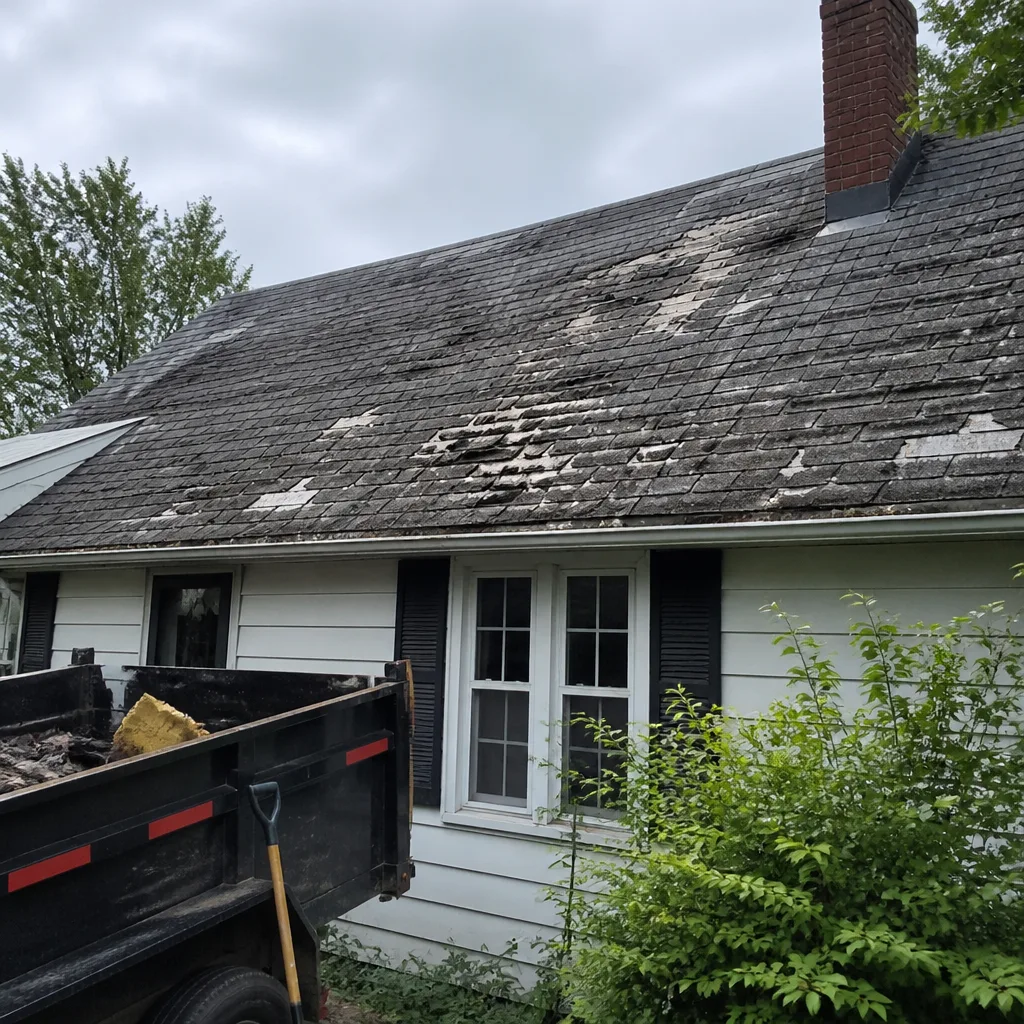 Before
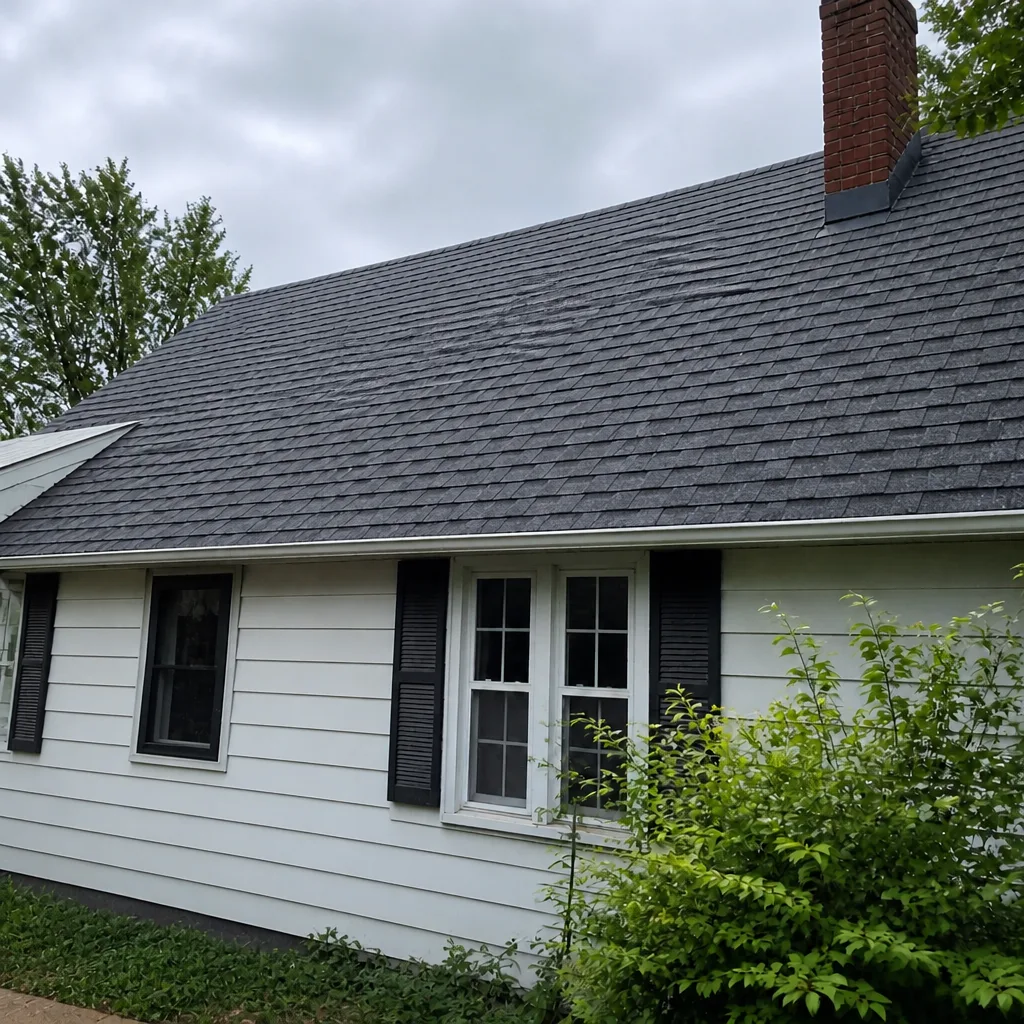 After
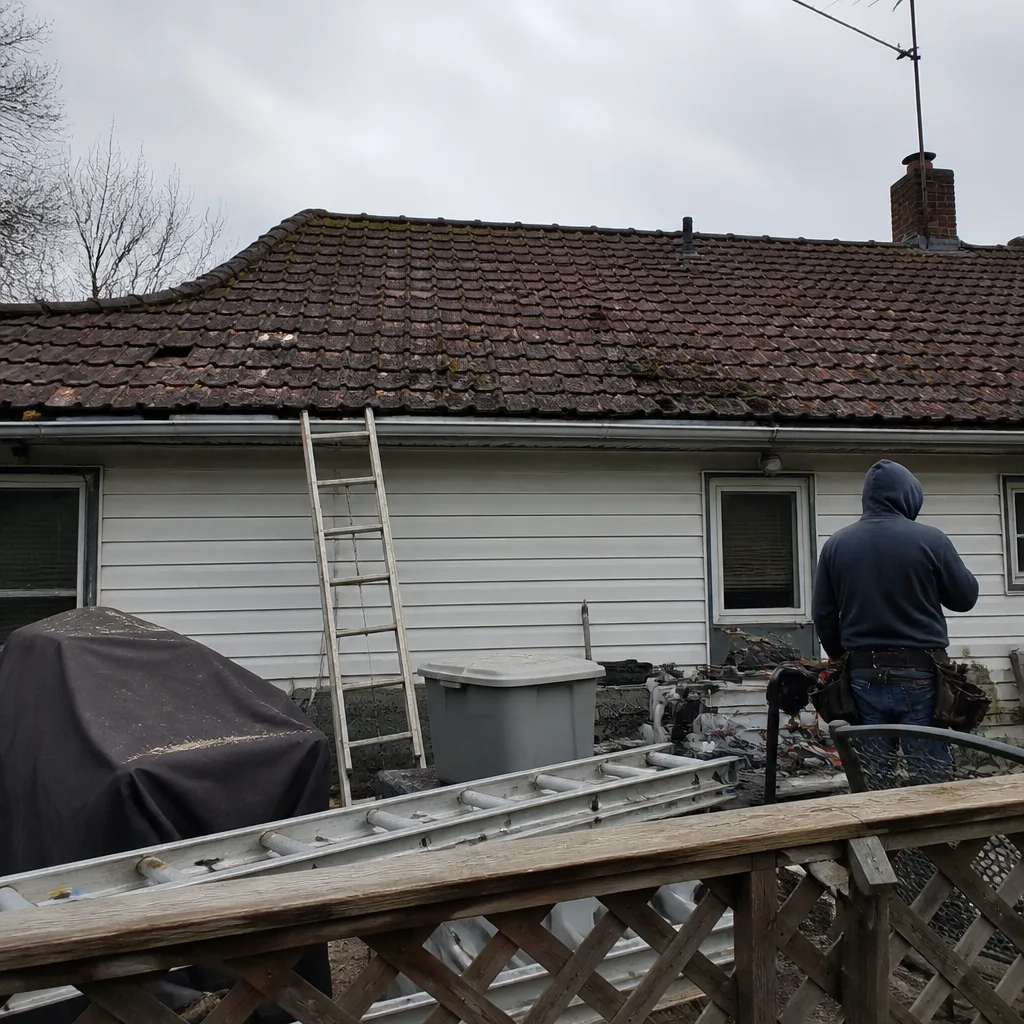 Before
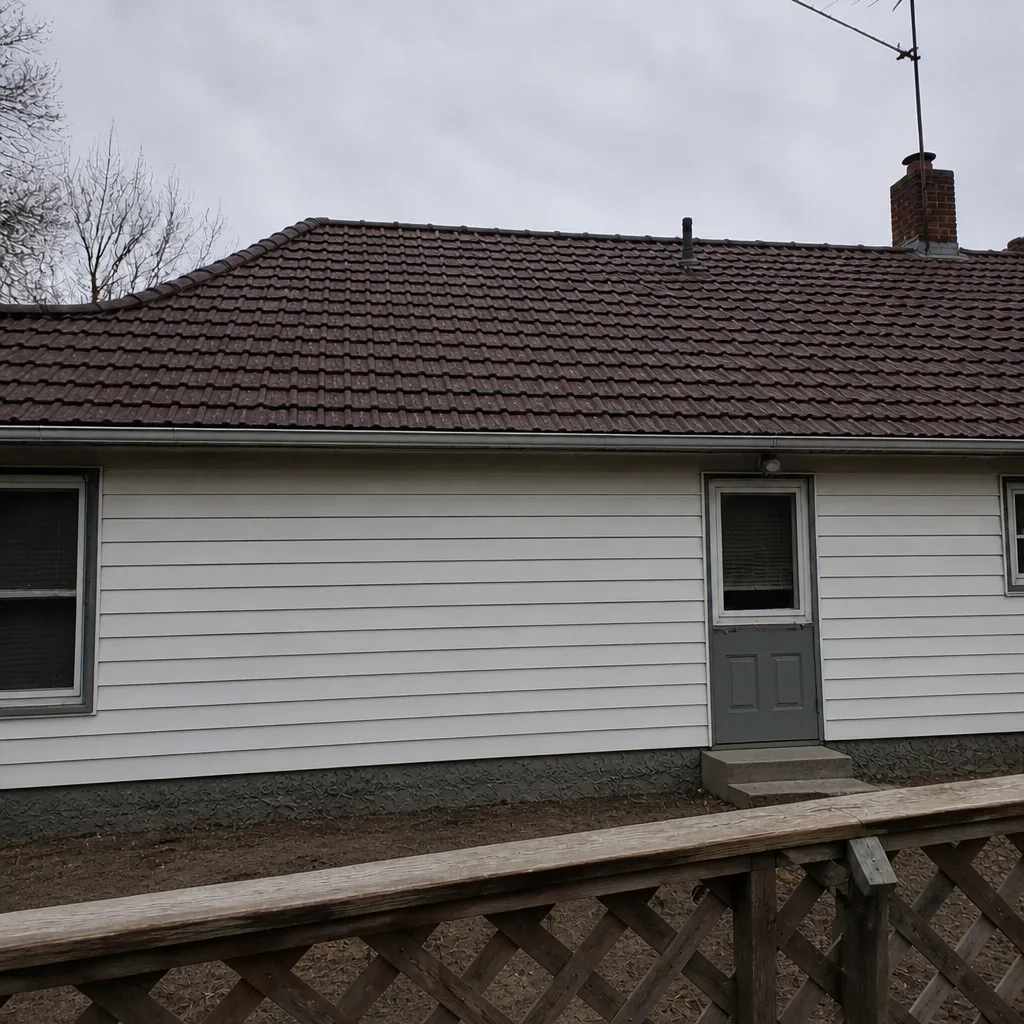 After
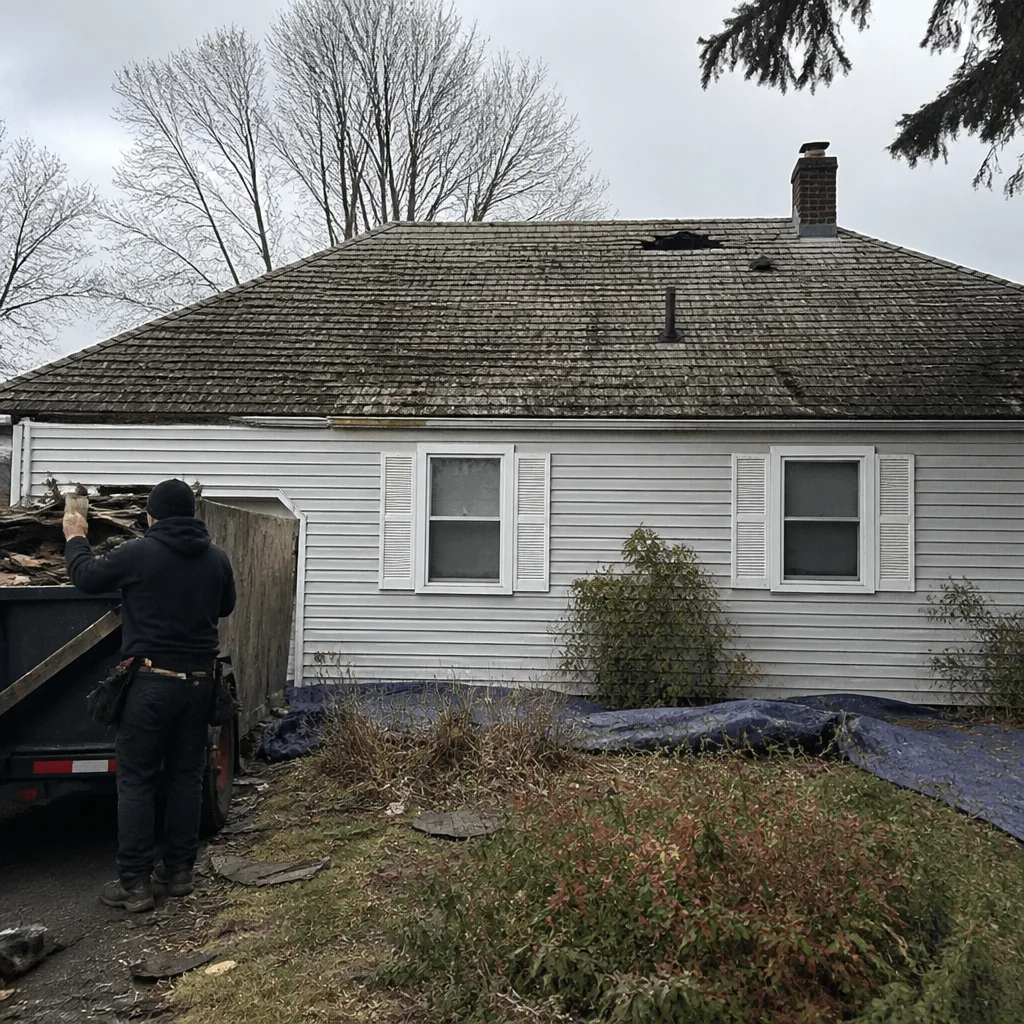 Before
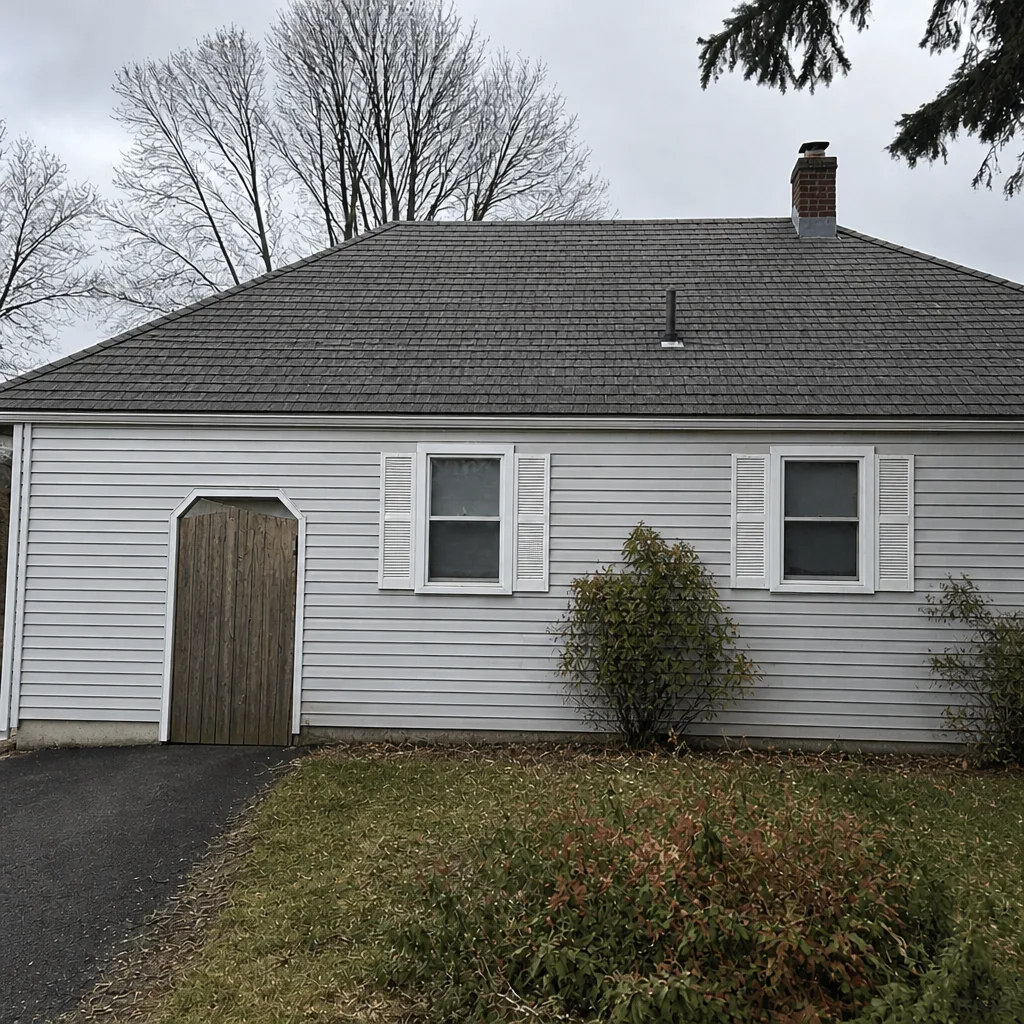 After
When to Call a Professional
Call when the sign you’re seeing has moved past the monitor list, and call without waiting for a weekend thaw to confirm it. The scenarios that most warrant a professional look in Rochester are: any interior ceiling or wall stain that appears after a snowmelt or rain, frost that persists on the underside of the roof deck through the winter, a wavy ridge line, missing ridge caps combined with a small interior damp patch, fascia staining you’ve decided to “get to next spring,” or soffit paint peeling at the same spot light is coming through the attic. Each of those has moved past cosmetic wear.
Valor Roof Repair offers free estimates in Rochester. We work with a full range of materials across seven major brands, from premium options like CertainTeed and Boral to value-tier choices, because the right recommendation depends on the roof’s actual condition, not on what’s left on a shelf. Call (855) 473-8654. We answer 24/7. Fast dispatch from 7am to 7pm, Sunday through Friday. A written line-item estimate sets the final price, and we don’t quote a replacement when a repair will do the job.
Frequently Asked Questions
The first signs appear in the attic: dark staining on the rafters or deck underside, daylight gaps at the ridge, or frost on the underside of the sheathing in winter. Those usually show up well before a ceiling stain. If you see any of them, schedule an inspection before the next cold snap. Call (855) 473-8654 for a free estimate.
Cosmetic loss looks like scattered bald patches with the shingles still lying flat and sealed at the edges. Structural failure shows as curling, clawing, cracked shingles, or the adhesive seal letting go between courses. If shingles are lifting, it’s structural. Call (855) 473-8654 to have a professional look before the next freeze.
Light ice at the eaves after a thaw is normal. Repeated ice at the same section of the roof, combined with fascia staining or soffit paint peeling, is a warning sign of a warm-roof or ventilation problem. Left alone, that cycle damages the deck and eave. Call (855) 473-8654 for a free inspection.
Not usually. In a cold-climate home, frost on the deck usually points to warm air reaching a cold surface, which is a ventilation and air-sealing issue rather than a water-entry one. Moisture damage can still result, so it’s worth a professional diagnosis. Call (855) 473-8654 for a free estimate.
No, not when the work is written into a fixed-price estimate before we start. We inspect, confirm the scope, and quote in writing with line items so the price you agree to is the price you pay, with no change orders once work begins. Call (855) 473-8654 for a free estimate.
Yes, and more often than you’d think. Many of the warnings in this guide are caught while a targeted repair is still the right call, especially ridge caps, isolated field damage, and eave flashing. A repair-first approach means we don’t default to replacement. Call (855) 473-8654 to be honest about which repair or replacement your roof actually needs.
The Bottom Line
The warning signs that save Rochester homeowners the most money are the quiet ones: attic staining, deck frost, fascia rust, soffit paint peeling, ice settling in a valley. By the time a ceiling stain appears, the window has narrowed. Walk the attic once a season in winter, scan the roof from the curb with binoculars after a thaw, and use the triage list here to sort what you’re seeing into monitor, repair, or call today. If you’re not sure which column a sign belongs in, get a professional diagnosis. Repair-first thinking costs nothing to explore and often saves the roof.
Call (855) 473-8654 for a free estimate. We answer 24/7. Fast dispatch from 7am to 7pm, Sunday through Friday. Written line-item estimates, honest scope, and access to seven major brands so the recommendation fits the roof and the budget. Learn more at Valor Roof Repair.
Written by the team at Valor Roof Repair.